ARFID Safe Foods: Common Examples and How to Build Your Own List


- For a person with ARFID, "safe foods" are foods that feel predictable and manageable to eat with minimal distress.
- ARFID safe foods vary from person to person, but many people gravitate toward foods with consistent textures, flavors, temperatures, and preparations.
- Safe foods often serve as an important foundation for nourishment, reducing anxiety, and expanding food variety over time.
- Factors like sensory sensitivity, fear of negative experiences, and low interest in food can all influence which foods feel safe.
- Approaches like food chaining can help some people build flexibility around eating by making small, gradual changes using foods they already trust.
If you have ARFID (avoidant/restrictive food intake disorder), figuring out what to eat can feel exhausting. Maybe you have a list of ARFID safe foods, while everything else feels overwhelming. Or if you're caring for someone with ARFID, you may be struggling to understand why foods that seem nearly identical can feel completely different to your child or loved one.
For people with ARFID, safe foods serve a practical purpose: they provide a reliable way to stay nourished while navigating the sensory, emotional, and physical challenges of ARFID with minimal anxiety or distress, says Tanya Hargrave-Klein, MS, RDN, LD, lead eating disorder dietitian at Equip.
Below, we'll cover common examples of ARFID safe foods, explain why certain foods feel safe, and explore how safe foods can serve as a starting point for expanding food variety.
What are ARFID safe foods?
ARFID safe foods are foods that a person can eat consistently with minimal anxiety, distress, or discomfort, says Hargrave-Klein. While there’s no universal ARFID safe food list, these foods often share specific characteristics, like a consistent texture, flavor, temperature, or appearance.
Safe foods aren't the same as "favorite foods" or "comfort foods." Someone with ARFID may genuinely enjoy a food but still avoid it because of a past negative experience, says Hargrave-Klein. And unlike comfort foods, which people often seek out for pleasure or emotional support, safe foods are typically the foods that create the least amount of anxiety or uncertainty.
Safe foods can also be highly specific. For some people, a food only feels safe if it's prepared a certain way, comes from a particular restaurant, or is a specific brand.
“Bland, highly consistent foods tend to feel less overwhelming because there are fewer surprises from one bite to the next,” explains Rachel Levine, LMFT, a certified cognitive behavior therapist for ARFID and clinical supervisor of intake and operations at Guidelight Health.
Common ARFID safe foods: a practical list
Safe foods serve an important purpose. They can make eating feel less stressful and help people meet their nutritional needs when other foods feel too difficult. So if you or someone you love has ARFID, the lists below can be a helpful starting point for planning meals and identifying foods that may feel more manageable.
At the same time, safe foods aren't meant to be the endpoint of recovery. The goal of ARFID treatment is to gradually build flexibility, confidence, and variety over time using safe foods as the foundation.
What’s more, ARFID safe foods vary from person to person: what feels safe for one may feel impossible for another. Still, clinicians who treat ARFID do see some patterns. So if some of the below foods feel familiar, you're not alone—and if none of them do, that's okay too.
By meal type
Here are common safe foods by meal type, according to Hargrave-Klein and Levine.
Breakfast
- Cheerios or Rice Chex (often a specific variety)
- Toast with butter or peanut butter, prepared the same way each time
- Frozen waffles
- Plain oatmeal
- Yogurt cups or drinkable yogurt (often a preferred brand and flavor)
- Applesauce
- Plain bagels with butter or cream cheese
- Granola bars
- Protein shakes (often a preferred brand and flavor)
Lunch
- Peanut butter sandwiches prepared the same way each time
- Plain buttered noodles
- Plain white rice
- Macaroni and cheese, often a boxed variety from a specific brand (like Kraft)
- Chicken nuggets from a specific brand or restaurant (like Tyson or McDonalds)
- Grilled cheese sandwiches
- Plain quesadillas
- Cheese pizza
- Deli meat sandwiches with limited ingredients
- Crackers with cheese
Dinner
- Plain or buttered pasta
- White rice with a preferred protein
- Chicken nuggets and french fries from a specific restaurant (like McDonalds)
- Frozen meals from a trusted brand (like Tyson)
- Plain hamburgers prepared a specific way
- Simple tacos with predictable ingredients
- Mashed potatoes
- Fish sticks or breaded chicken products
Snacks
- Goldfish crackers
- Ritz crackers or Saltines
- Dry cereal
- String cheese
- Applesauce pouches
- Yogurt cups
- Granola bars
- Pretzels
- Potato chips
- Oreos
- Vanilla ice cream
- Fruit snacks or gummies
By sensory profile
Safe foods can look different depending on what type (or types) of ARFID someone has. Some people avoid foods because of fears about eating or a lack of interest in food. Those with sensory-based ARFID find that certain textures, temperatures, flavors, or mouthfeels feel safer and more manageable than others. Here are some common examples of safe foods for ARFID driven by sensory sensitivity, according to Hargrave-Klein and Levine.
Smooth and creamy
These foods provide a consistent texture with few surprises:
- Yogurt (often a specific brand and flavor)
- Applesauce or applesauce pouches
- Smooth peanut butter
- Vanilla ice cream
- Pudding
- Smooth mashed potatoes
- Protein shakes
- Smoothies made with familiar ingredients
Crunchy and dry
Many people with ARFID prefer foods that provide a predictable crunch or crisp texture, like:
- Goldfish crackers
- Ritz crackers or Saltines
- Pretzels
- Potato chips
- Dry cereal, such as Cheerios or Rice Chex
- Crackers with minimal seasoning
- Toast
- Certain brands of chicken nuggets with a consistent breading
Plain and bland
Foods with mild flavors and minimal ingredients often feel more predictable and less overwhelming, including:
- Plain pasta or buttered noodles
- White rice
- Plain bread
- Frozen waffles
- Macaroni and cheese
- Plain bagels
- Grilled cheese sandwiches
- Cheese pizza
Soft and uniform
Some people prefer foods with a soft, consistent texture that reduces the risk of unexpected sensory experiences, such as:
- String cheese
- Yogurt
- Applesauce
- Plain oatmeal
- Mashed potatoes
- Buttered pasta
- White rice
- Soft bread products
By energy level
On days when anxiety is high, executive functioning is low, or eating feels harder than usual, many people with ARFID rely on foods that require minimal preparation or decision-making, says Hargrave-Klein.
According to Levine, low-prep, low-decision foods may include:
- Applesauce pouches
- Yogurt cups
- Protein shakes that the person already trusts
- Granola bars
- String cheese
- Dry cereal
- Goldfish crackers, Ritz crackers, or Saltines
- Frozen waffles
- Frozen chicken nuggets
- Microwaveable macaroni and cheese
- Peanut butter sandwiches prepared the same way each time
Why do certain foods feel safe with ARFID?
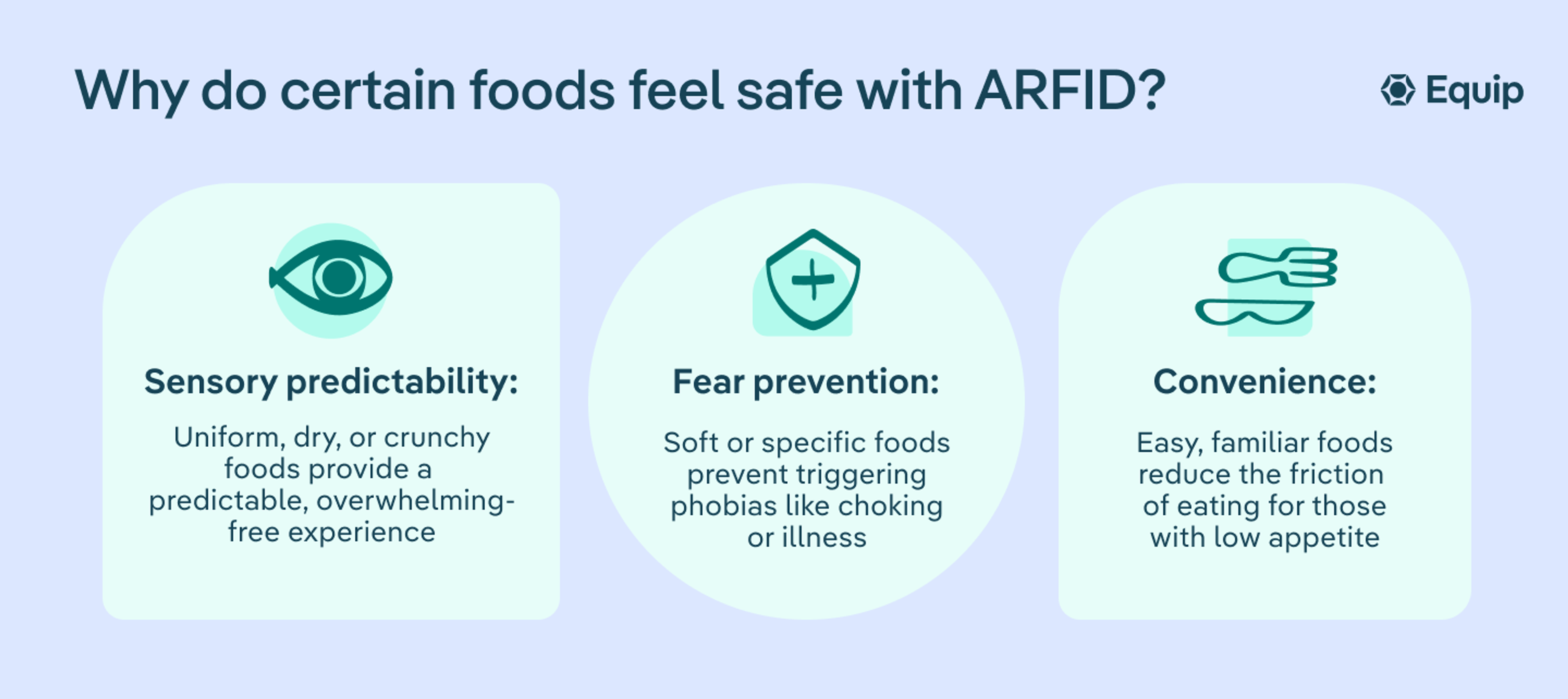
The foods that feel safe with ARFID are often shaped by the reason someone avoids or restricts eating in the first place. Here’s the breakdown.
Sensory sensitivity
For people with sensory ARFID, safe foods often have predictable textures, temperatures, flavors, or appearances, according to a study in the Journal of Eating Disorders.
“Foods that are soft, uniform, dry, or crunchy tend to be easier to tolerate because they provide a predictable sensory experience,” says Levine. “On the other hand, foods with mixed textures, visible ingredients, inconsistent temperatures, or strong smells can feel extremely overwhelming.”
It’s important to understand that these reactions are genuine sensory experiences, not choices or defiance, she adds.
Fear of aversive consequences
For some people with fear-based ARFID, certain foods feel unsafe because of what they fear could happen after eating them, per a study in Nutrients. This fear can develop after a distressing experience, such as food poisoning or choking.
The specific safe foods will vary depending on the fear and any triggering accident that led to the fear developing. For example, someone with a fear of choking may rely on softer foods (like applesauce, mashed potatoes, or shakes) while avoiding foods that feel harder to chew or swallow (like hot dogs, nuts, or raw vegetables).
Low interest in food or eating
Some people with ARFID avoid food because they simply don't experience much hunger or have a lack of interest in eating. As a result, they gravitate toward foods that are familiar, convenient, and easy to eat consistently (think: protein shakes, granola bars, crackers, and frozen foods), says Levine.
Why brand and preparation matter — and why that's not "being difficult"
Maybe your kid only eats a specific brand of chicken nuggets, or you find yourself cringing at an unfamiliar pasta shape. While eating highly specific safe foods can look like stubbornness from the outside, it's actually a recognized and common symptom of ARFID.
“This preference is deeply logical, as these individuals typically crave absolute consistency in a food's texture, temperature, appearance, and taste,” says Hargrave-Klein. “Because those with ARFID can detect even the most minute variations, any discrepancy often leads to escalating distress and anxiety.”
This is one reason why highly processed or packaged foods often become safe foods. Foods like Oreos, Kraft Mac & Cheese, and Tyson chicken nuggets deliver the same experience every time, whereas naturally variable foods—such as fruit, vegetables, or homemade meals—can feel much less predictable, says Hargrave-Klein.
This need for consistency may also help explain why ARFID commonly co-occurs with neurodivergence, particularly autism and ADHD, per research in the Journal of Eating Disorders. For people who experience heightened sensory sensitivities or find unpredictability especially stressful, knowing exactly what a food will look, feel, and taste like can make the difference between a meal that feels manageable and one that feels overwhelming.
Safe foods can look different in children and adults
In children, safe foods are often shaped by sensory preferences, routines, and a need for predictability. That’s why a child may only eat foods from a specific brand, reject a food if it's prepared differently than usual, or become distressed when asked to try something new, according to a study in Nutrients. Because parents and caregivers are usually responsible for meals, safe foods can also become a source of confusion, stress, and conflict within the family.
It’s also important to note that there’s o a difference between ARFID vs. picky eating. Unlike picky eating, which many children gradually outgrow, ARFID does not get better with time and can interfere with nutrition, social experiences, and family life.
In adults, safe foods are often tied to routines and coping strategies that have developed over many years—sometimes before a person even realizes they have ARFID. For instance, an adult may avoid restaurants, bring their own food to social events, or rely on a small set of ARFID-friendly meals they know they can tolerate, per research in the Journal of Eating Disorders.
Using safe foods as a bridge, not a ceiling
Instead of working against safe foods, ARFID treatment often uses them as a foundation for introducing new foods and experiences. Here’s what to know.
What is food chaining?
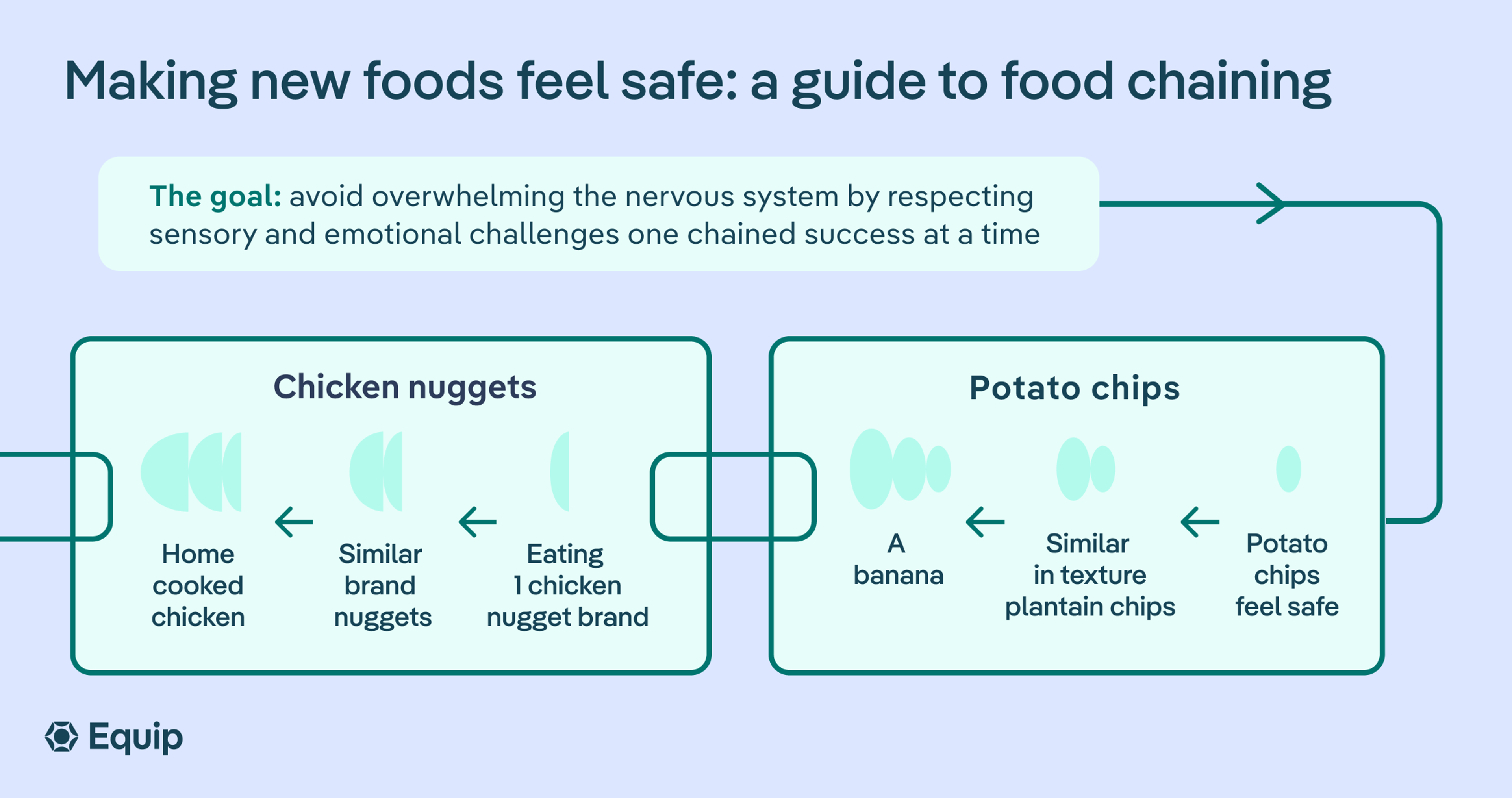
Food chaining is a common ARFID treatment strategy that helps people expand their diets by making small, manageable changes to foods they already consider safe, says Hargrave-Klein.
For example, someone who only eats one brand of chicken nuggets might first try a similar brand before working toward home-cooked chicken. Or a person who feels comfortable eating potato chips might try similarly textured plantain chips before eventually eating a banana.
"The goal is to build on success rather than overwhelm the nervous system," says Levine. "It's about helping them slowly expand flexibility while respecting the genuine sensory and emotional challenges that come with ARFID."
Food chaining involves carefully balancing nutrition, sensory preferences, and anxiety. That’s why it's generally most effective when done with the support of an ARFID-informed dietitian or treatment team.
It’s important to work with an ARFID-informed dietitian to try food chaining. That's why Equip's ARFID treatment model brings together therapists, dietitians, physicians, psychiatrists, and peer and family mentors to help people expand their diets while working from the foods that already feel safe. If you're wondering whether your eating patterns could be related to ARFID, taking Equip’s ARFID screener is a helpful first step.
Building your own safe foods list
A safe foods list can be a helpful tool to reduce decision fatigue, simplify ARFID meal plans, and provide a starting point for expanding food variety. This, too, it’s best to do with the support and care of an ARFID-informed dietitian.
If you're an adult or teen with ARFID, consider writing down the foods you can reliably eat, along with any details that make them feel safe. If you're caring for a child with ARFID, creating a safe foods list alongside their dietitian can help you better understand their eating patterns and reduce some of the stress and guesswork around meals.
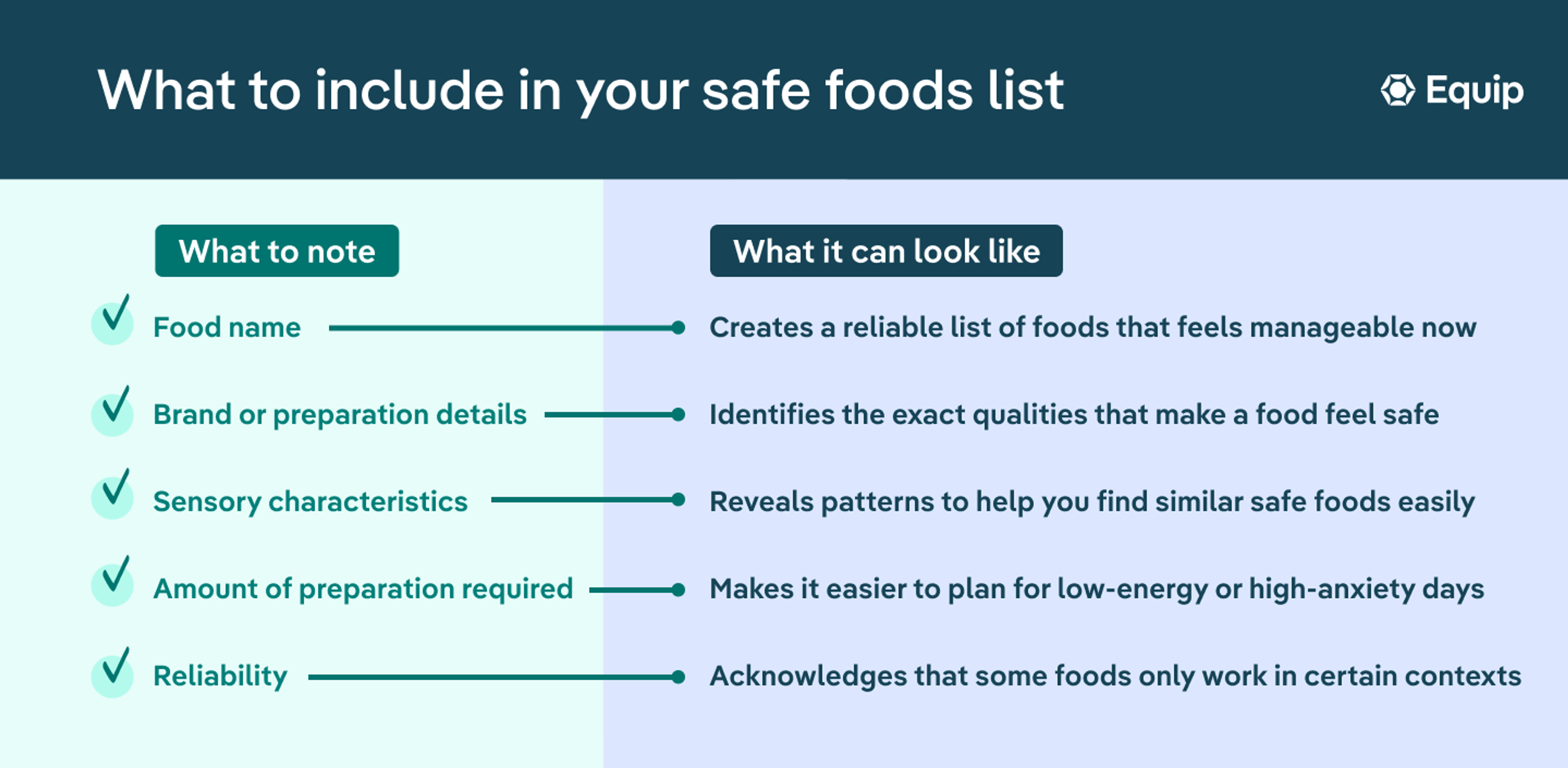
More specifically, it can help to track:
What to include in your safe foods list
What to note | Why it helps |
Food name | Creates a reliable list of foods that currently feel manageable |
Brand or preparation details | Helps identify the specific qualities that make a food feel safe |
Sensory characteristics | Can reveal patterns in taste, texture, smell, and/or appearance that make it easier to identify similar foods |
Amount of preparation required | Makes it easier to plan for low-energy or high-anxiety days |
Reliability | Acknowledges that some foods may feel manageable only in certain circumstances |
It’s also helpful to organize foods into categories, such as "always," "sometimes," and "not yet." According to Hargrave-Klein, clinicians sometimes refer to these as green, yellow, and red foods. This framework can help people with ARFID maintain adequate nutrition while also identifying opportunities to gradually expand food variety.
The bottom line
Safe foods are a valid and important part of living with ARFID. They help people stay nourished, reduce distress, and create predictability when food feels overwhelming.
At the same time, safe foods don't have to define what someone can eat forever. With the right support, they can become a foundation for building more flexibility and confidence around food. If eating feels like a daily struggle or a safe foods list has become so limited that it's affecting health or quality of life, know that effective treatment for ARFID exists and you don’t have to navigate it alone. Talk to your doctor, or schedule a call with Equip to start the recovery process.
Frequently asked questions (FAQs)
What foods are most commonly safe for people with ARFID?
While safe foods vary widely from person to person, some common examples include buttered pasta, chicken nuggets, french fries, crackers, dry cereal, yogurt, applesauce, white rice, macaroni and cheese, and certain packaged or processed foods. Many people with ARFID prefer foods that are consistent in taste, texture, temperature, and appearance. That’s why a safe food may need to come from a specific brand, restaurant, or be prepared in a particular way to feel manageable.
Is it okay to only eat safe foods if you have ARFID?
Safe foods play an important role in helping people with ARFID stay nourished. However, if someone's list of safe foods becomes so limited that it's affecting their health, growth, daily functioning, or quality of life, it may be time to seek help. In ARFID treatment, safe foods are often used as a starting point for gradually expanding food variety.
Why does the brand or preparation method matter so much for ARFID safe foods?
For many people with ARFID, even small changes in a food's taste, texture, appearance, or preparation can make it feel like an entirely different food. That's why someone may only eat chicken nuggets from a particular brand or toast that’s prepared a specific way. These preferences often reflect a need for predictability and consistency that helps eating feel safe and manageable.
Bering, Jamie, and John K DiBaise. “Fear, Feeding, and the Gut: Nutrition Support Considerations in Adults with ARFID and Gastrointestinal Symptoms.” Nutrients vol. 18,5 726. 24 Feb. 2026, doi:10.3390/nu18050726
Białek-Dratwa, Agnieszka et al. “ARFID-Strategies for Dietary Management in Children.” Nutrients vol. 14,9 1739. 22 Apr. 2022, doi:10.3390/nu14091739
Fonseca, Natasha K O et al. “Avoidant restrictive food intake disorder: recent advances in neurobiology and treatment.” Journal of eating disorders vol. 12,1 74. 7 Jun. 2024, doi:10.1186/s40337-024-01021-z
Ruiz Fischer, Megan M, and Rachel A Starr. “A tradeoff between safety and freedom: Adults' lived experiences of ARFID.” Journal of eating disorders vol. 12,1 107. 2 Aug. 2024, doi:10.1186/s40337-024-01071-3
Thomas KS, Keating J, Ross AA, Cooper K, Jones CRG. Avoidant/restrictive food intake disorder (ARFID) symptoms in gender diverse adults and their relation to autistic traits, ADHD traits, and sensory sensitivities. J Eat Disord. 2025 Feb 17;13(1):33. doi: 10.1186/s40337-025-01215-z. PMID: 39962613; PMCID: PMC11834292.