How ARFID Is Treated: Therapy, Nutrition, and Support


- ARFID treatment is tailored to each person's specific symptoms, needs, and experiences with food.
- Effective ARFID treatment often includes a combination of therapy, nutrition support, medical care, exposure work, and support from loved ones.
- Treatment may look different depending on whether someone's symptoms are driven by sensory sensitivities, fear around eating, low appetite, or a combination of factors.
- ARFID treatment focuses on building safety, confidence, flexibility, and adequate nutrition over time rather than forcing someone to eat or "get over" food fears.
- Children, teens, and adults can all benefit from specialized ARFID treatment, even if symptoms have been present for many years.

If you're looking into ARFID treatment for yourself or a loved one, you may be feeling overwhelmed, confused, or unsure where to start. That's understandable. ARFID (avoidant/restrictive food intake disorder) looks different from person to person, which can make finding clear information about treatment especially challenging.
Unlike most other eating disorders, ARFID isn't driven by concerns about body weight, shape, or appearance, according to StatPearls. Instead, eating difficulties are often related to sensory sensitivities, fears about eating (such as choking or getting sick), or a lack of interest in food. That’s why ARFID treatment often looks different from treatment for other eating disorders—and why it's important to seek care from providers who understand ARFID specifically, according to Lily Thrope, LCSW, founder of Thrope Therapy.
That said, ARFID is treatable, and people of all ages can benefit from support. In this guide, we'll explore what ARFID treatment can involve, how it may vary depending on a person's symptoms, and what recovery can look like in real life.
What ARFID treatment is designed to do
ARFID treatment is designed to help people eat enough, feel safer around food, and participate more fully in daily life, according to Jonathan Levine, LCSW, therapist lead at Equip.
ARFID can affect nutrition, physical health, emotional well-being, relationships, school, work, and social activities, which is why treatment often focuses on several goals at once. Depending on the person's symptoms and needs, experts say treatment may aim to:
- Improve nutrition and address any nutritional deficiencies or medical concerns
- Support healthy growth and development in children and adolescents
- Reduce fear, anxiety, distress, or avoidance related to food and eating
- Expand food flexibility and variety
- Regulate hunger and fullness cues
- Increase enjoyment of food
- Build confidence around eating situations that feel difficult or unsafe
- Address co-occurring mental health conditions
- Help loved ones respond in ways that support recovery
- Improve quality of life, including participation in school, work, relationships, and social activities
What ARFID treatment typically includes
ARFID treatment is often multidisciplinary, meaning it brings together different types of support to address the person's unique needs. The exact plan will depend on someone’s symptoms, age, medical needs, and goals.
Here’s what to know about the most effective ARFID treatment options.
Therapy
For many people with ARFID, therapy is one of the main components of treatment. It's typically provided by a therapist, psychologist, or other mental health professional with experience treating ARFID.
The goal of therapy is to help people understand what makes eating feel difficult, distressing, or unsafe, and then gradually build more confidence and flexibility around food, says Thrope. Depending on the person's symptoms, therapy may focus on:
- Reducing anxiety and avoidance
- Building coping skills
- Navigating social eating situations
- Increasing motivation to engage in treatment and work towards recovery
- Addressing co-occurring conditions (like anxiety, OCD, or depression)
ARFID counseling approaches may include:
- Cognitive behavioral therapy for ARFID (CBT-AR): According to the Journal of Behavioral and Cognitive Therapy, this type of therapy helps people understand the thoughts, feelings, and behaviors that maintain ARFID, and develop behaviors that allow for more flexibility around eating. Exposure is the primary mechanism of change in CBT-AR, and it aims to use repeated exposures to increase volume and/or variety of dietary intake.
- Family-based treatment for ARFID (FBT-ARFID): FBT is the gold standard treatment approach for children and adolescents with anorexia nervosa, and can help caregivers support meals, nutrition, and recovery at home, per Behavioral Sciences. FBT-ARFID is a specialized version of FBT tailored to ARFID.
- Exposure-based therapy or exposure and response prevention (ERP): This approach helps people slowly build comfort and confidence around foods, physical sensations, or situations they've learned to avoid, per a study in Nutrients. It is primarily utilized for fear of aversive consequences ARFID and isn’t applicable to or appropriate for use for the other two presentations.
Nutrition support
Treatment often involves working with a registered dietitian who understands ARFID and how it differs from other eating disorders. They help patients get the nourishment they need while also building a foundation for recovery based on the person’s safe foods list.
According to research in Healthcare, nutrition support may focus on:
- Improving nutritional intake
- Establishing consistent eating patterns
- Addressing nutritional deficiencies
- Supporting growth or weight restoration when needed
- Increasing food flexibility
Nutrition support also looks different depending on the person's ARFID presentation. For example, someone with sensory sensitivities may work on expanding foods within textures or flavors that already feel safe. Dietitians might support patients with low appetite with meal planning and incorporating easy-to-prepare meals and snacks. Support for a patient with fear of aversive consequences might involve brainstorming calorically dense options to support weight restoration or maintenance while the therapist is targeting fear through exposures. Fear of aversive consequences support might also involve the dietitian helping reincorporate previously feared foods that were addressed through exposure work with the therapist.

Medical care and monitoring
ARFID can affect physical health, so medical care is often an important part of treatment, per StatPearls. This support may come from a pediatrician, GI doctor, or another medical provider who understands ARFID.
Medical providers help ensure a person's body gets what it needs to stay healthy. Depending on the situation, they may monitor things like:
- Growth
- Weight trends
- Vital signs
- Hydration
- Nutritional deficiencies
- Any physical symptoms that make eating more difficult
It’s also important to target other conditions that can make eating harder. “Things like functional GI disorders, food allergies and sensitivities, or sensory processing disorders need to be addressed,” says Jessie Menzel, PhD, Equip’s vice president of clinical programs. “It's important that we do everything we can to make eating an easier or less painful experience for a person with ARFID.”
Finally, know that someone can need medical support for ARFID even if they don't appear underweight or "look sick." Medical monitoring ensures treatment supports both physical health and recovery.
Psychiatric support (when needed)
Some people with ARFID also have co-occurring mental health conditions, such as anxiety, OCD, depression, or ADHD, per research in JAMA Pediatrics. In these cases, a psychiatrist or other mental health provider may be part of the treatment team.
A psychiatrist can evaluate whether medication may help manage symptoms of a co-occurring condition that makes eating and recovery more challenging. While medication isn't a standalone fix for ARFID, it may help some people better engage in their treatment overall.
Family, caregiver, or loved one support
Family members, caregivers, partners, friends, and other trusted people can play an important role in ARFID therapy. For children and teens, loved ones often provide structure for the child's eating schedule, support exposure exercises at home, and help manage food-related anxiety, per a review in Frontiers in Pediatrics. They also practice positive modeling by showing their child that eating a variety of foods is enjoyable.
For adults, treatment is generally more self-driven. Some adults choose to involve a partner, friend, or chosen family member in treatment, according to the Journal of Eating Disorders. Regardless of age, involvement of loved ones should aim to reduce stress and increase support, not create pressure or shame.
Coaching and lived-experience support
ARFID can feel isolating, confusing, and difficult to explain to other people. That's why some treatment programs, including Equip, incorporate coaches with lived experience of eating disorder recovery.
“ARFID can be an isolating and confusing experience, even within the eating disorder treatment community,” says Kelsey Gilchriest, an Equip recovery coach who is in recovery from ARFID. “Coaches offer their lived experience to surround patients and families with the message that they are not alone and that recovery is possible.”
If eating is hard because of… | Treatment may focus on… |
Sensory sensitivity | Gradually helping the person feel more comfortable with different textures, tastes, smells, temperatures, food appearances, brands, and other sensory experiences |
Fear of choking, vomiting, allergic reactions, pain, or illness | Helping the person feel safer around food by slowly building confidence, reducing avoidance, and tolerating distress |
Low appetite or low interest in food | Building more consistent eating habits, creating routines around food, meeting nutritional needs, and helping eating feel more manageable |
A combination of factors | Combining different strategies based on the specific challenges that are making eating difficult |
How ARFID treatment is personalized
While many ARFID treatment plans include the same core components, the specific approach should be tailored to the individual. That's because ARFID generally presents in one (or more) of three ways, and each type of ARFID can require a different treatment focus:
- Low interest in food or low appetite: Some people rarely feel hungry, become full quickly, or find eating more like a chore than a source of enjoyment.
- Sensory sensitivity: Some people experience intense aversions to certain textures, tastes, smells, temperatures, colors, or other sensory aspects of food.
- Fear of aversive consequences: Some people avoid eating because they're afraid of choking, vomiting, having an allergic reaction, experiencing pain, or becoming ill.
What exposure work can look like in ARFID treatment
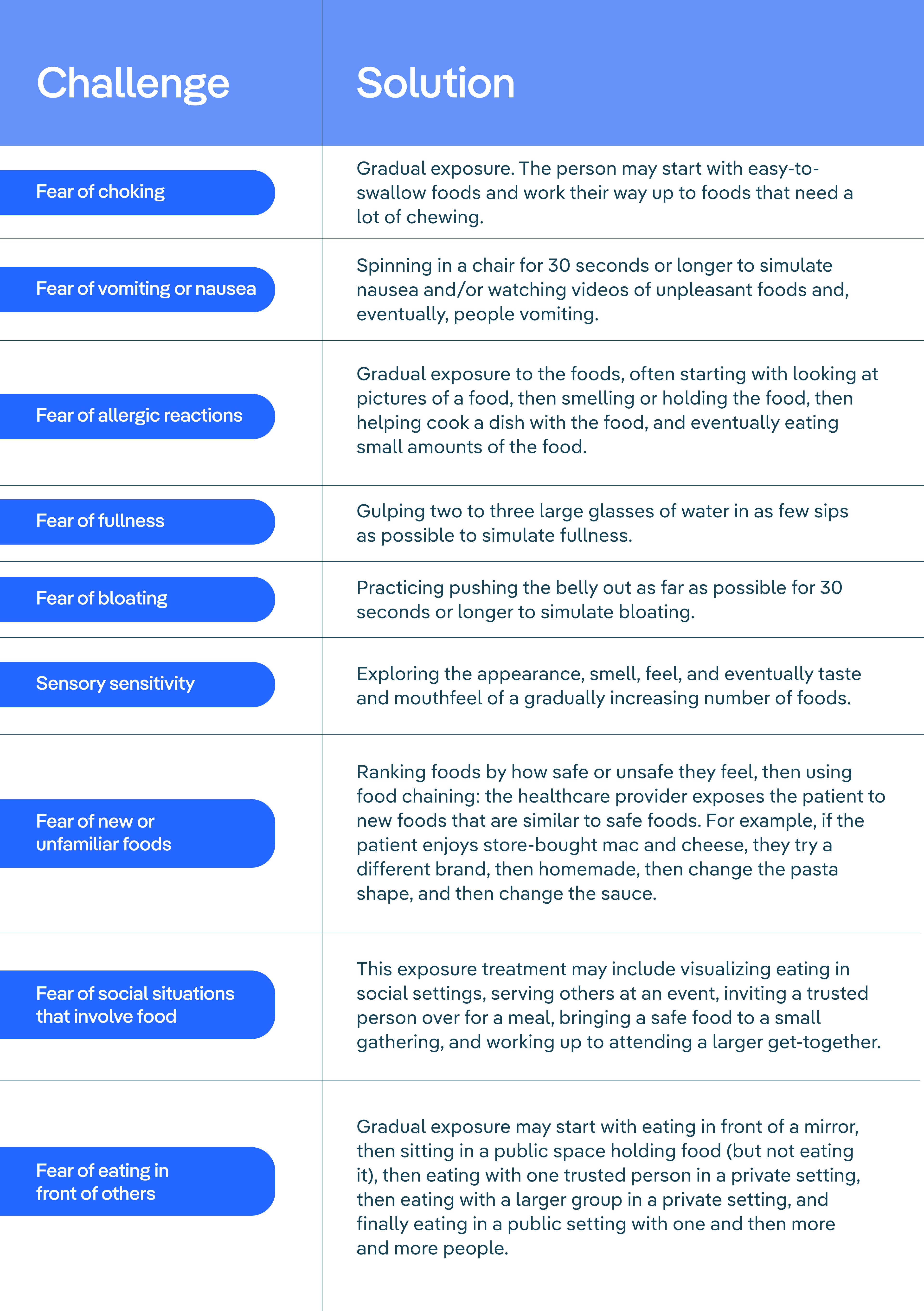
Exposure work is a common part of ARFID treatment. In simple terms, it involves gradual and safe exposure to foods, sensations, or eating situations that feel difficult, says Levine. The keyword here is “safe:” Exposure work doesn’t involve forcing someone to eat foods they fear, tricking them with hidden ingredients, or pushing them faster than they're ready to go.
What exposure work looks like ultimately depends on what's driving the ARFID. For someone with sensory sensitivities, “it could be just picking up a small amount of food, or even having it on your plate with no expectation of eating it,” says Levine. “From there, maybe we move into holding it, smelling it, and describing it neutrally. When someone feels ready, maybe we take one small bite, which another day becomes two, and so on.”
For people with fear-based ARFID, on the other hand, exposures may focus on building confidence around physical sensations or feared outcomes. "Our goal is to gather new data to see if the fears are reality-based or not," Levine says. "This shows people that they can survive the distress more than they realize and that their fear may not come true after all."
How ARFID treatment changes with age and life stage
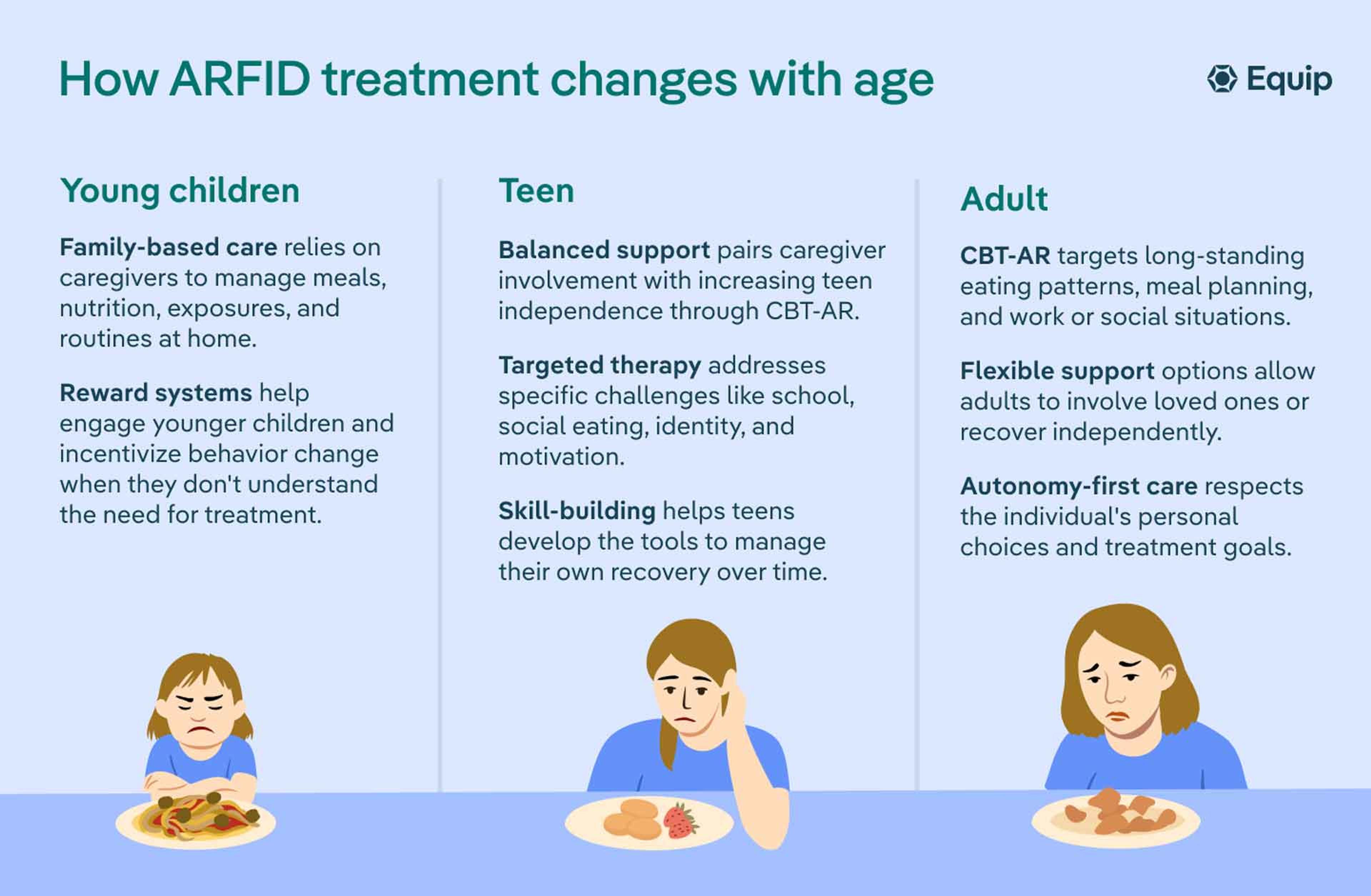
ARFID can affect people of all ages, and treatment can be effective no matter how old you are. However, treatment goals and approaches can vary based on your stage of life. According to Levine, here’s the breakdown of how care differs depending on a patient’s age:
- Children: Treatment often requires caregiver involvement, which is why family-based approaches are commonly used with younger children. Parents and caregivers may support meals, nutrition, exposures, and routines at home. Younger children also may not understand why they need treatment in the first place, which is why some providers recommend reward systems to make treatment more engaging and incentivize behavior change.
- Teens: Treatment typically balances caregiver support with increasing independence, making CBT-AR is an effective approach for many teens. Therapy may address challenges related to school, social eating, identity, and motivation, while helping teens build skills they'll need to manage recovery more independently over time.
- Adults: CBT-AR is also commonly used to treat ARFID in adults. Adults may work on longstanding eating patterns, social and work situations, meal planning, and daily routines. Some adults choose to involve partners or other loved ones in treatment, while others prefer to navigate recovery more independently. Regardless, treatment should respect the person's autonomy and individual goals.
How loved ones can support someone in ARFID treatment
Watching someone you care about struggle with eating can be frustrating, confusing, and frightening. Many parents, partners, and caregivers respond by trying to encourage, persuade, or push the person to eat more out of genuine concern and compassion. But with ARFID, these approaches often do more harm than good.
What helps | What can backfire |
Learning about ARFID and trying to understand what's making eating difficult | Assuming the person is "just being picky" or stubborn |
Staying calm, patient, and supportive during meals | Showing frustration, anger, or disappointment |
Validating the person's experience, even if you don't fully understand it | Saying things like "Just eat," "It's not a big deal," or "You're overreacting" |
Working with the treatment team and following their recommendations | Creating your own exposure challenges or pushing foods outside of treatment |
Encouraging gradual progress and celebrating small wins | Expecting rapid change or focusing only on setbacks |
Respecting safe foods while supporting treatment goals | Taking away safe foods or refusing to offer them |
Asking open-ended questions, such as "What feels hardest about eating right now?" | Arguing about whether a fear or food aversion is "rational" |
Offering support and accountability without judgment | Using shame, guilt, bribery, or threats to encourage eating |
Reminding them that recovery takes time and that they're not alone | Making jokes about being "picky" or minimizing their struggles |
Instead, experts recommend focusing on creating a sense of safety, consistency, and support around food. "Be patient, loving, and kind, and seek education on what ARFID looks like so you can better understand exactly why and how your loved one is struggling," says Levine.
"Avoid putting pressure or force on your loved one. This is often the worst approach for ARFID," adds Thrope. "It is most important to prioritize trust and safety with those who are struggling."

When to seek ARFID treatment—and what getting started can look like
There’s no need to wait until ARFID becomes severe to seek support. In fact, getting help earlier can reduce the physical, emotional, and social damage that builds up over time.
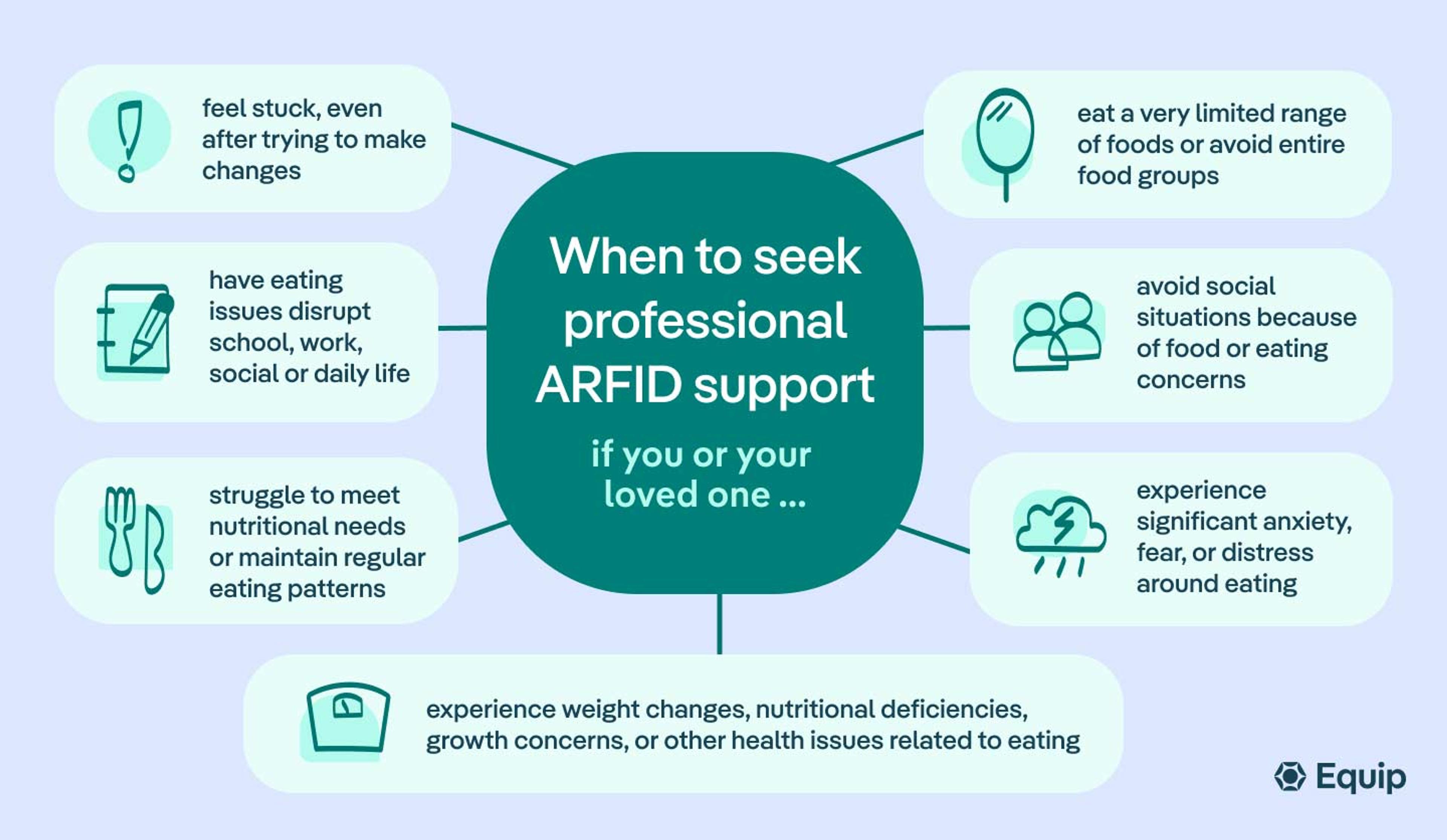
According to experts, it may be time to seek professional support if you or your loved one:
- Eat a very limited range of foods or avoid entire food groups
- Experience significant anxiety, fear, or distress around eating
- Avoid social situations because of food or eating concerns
- Experience weight changes, nutritional deficiencies, growth concerns, or other health issues related to eating
- Struggle to meet nutritional needs or maintain regular eating patterns
- Find that eating challenges are affecting school, work, relationships, or daily life
- Feel stuck, even after trying to make changes
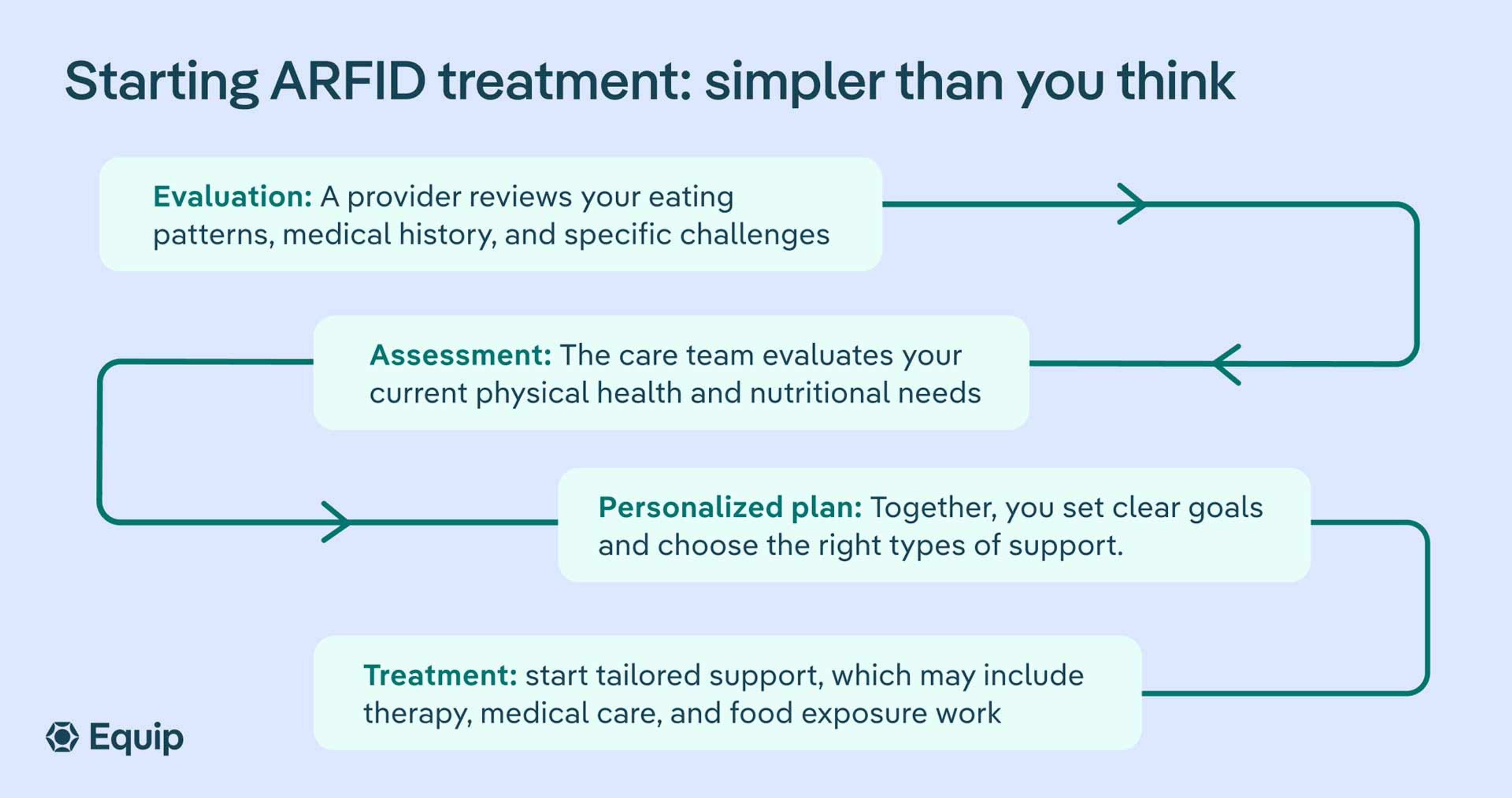
Getting started with ARFID treatment can feel overwhelming, but the process is usually more straightforward than many people expect. It often involves:
- An evaluation: A provider will ask about eating patterns, symptoms, medical history, and what's making eating feel difficult.
- A medical and nutritional assessment: The treatment team will evaluate nutritional needs, physical health, and any other concerns that may need support.
- A personalized treatment plan: Together, you'll identify treatment goals and determine which types of support are likely to be most helpful.
- Beginning treatment: Depending on the person's needs, treatment may include therapy, nutrition support, medical care, exposure work, and support for loved ones.
The most important thing to remember is that ARFID is treatable, and you don't have to figure it out alone. If you're concerned that you or someone you love may have ARFID, consider taking Equip's ARFID screener or scheduling a no-obligation call to explore your options.
The bottom line
ARFID treatment is most effective when it's tailored to the person's specific experiences with food, eating, and safety. Depending on the individual's needs, treatment may include therapy, nutrition support, medical care, exposure work, and support from loved ones.
The good news is that ARFID is treatable, and recovery is possible. People of all ages can start feeling safer, more flexible, and more confident around food with specialized care and the right support system.
Frequently asked questions (FAQs)
Can ARFID be cured?
ARFID is considered a treatable eating disorder, and many people experience significant improvements in their eating, nutrition, and quality of life with the right support. Recovery looks different for everyone, but treatment can help people feel safer around food.
What is the role of family in ARFID treatment?
Family members, caregivers, partners, and other loved ones can play an important role in recovery. For children and teens, loved ones often help support meals, exposures, and treatment goals at home. Adults may also choose to involve trusted loved ones in their treatment. In all cases, the goal is to create an environment that feels safe and supportive.
What's the difference between treatment for ARFID and treatment for other eating disorders?
Unlike many other eating disorders, ARFID isn't primarily driven by concerns about body image. As a result, treatment often focuses on addressing the specific factors that make eating difficult (like sensory sensitivities, fear of negative consequences, or low appetite). This is why it's important to work with providers who have experience treating ARFID specifically.

Cucinotta, Ugo et al. “A Systematic Review to Manage Avoidant/Restrictive Food Intake Disorders in Pediatric Gastroenterological Practice.” Healthcare (Basel, Switzerland) vol. 11,16 2245. 10 Aug. 2023, doi:10.3390/healthcare11162245
da Fonseca, Pâmela Gracielle et al. “The influence of family in children's feeding difficulties: an integrative review.” Frontiers in pediatrics vol. 13 1609714. 9 Jul. 2025, doi:10.3389/fped.2025.1609714
Datta, Nandini et al. “Family-Based Treatment for Avoidant/Restrictive Food Intake Disorder: Last-Session Reflections.” Behavioral sciences (Basel, Switzerland) vol. 16,3 325. 27 Feb. 2026, doi:10.3390/bs16030325
Di Luzio, Michelangelo et al. “Understanding the Relationship Between Avoidant/Restrictive Food Intake Disorder and Obsessive-Compulsive Symptoms: A Systematic Review.” Nutrients vol. 18,5 874. 9 Mar. 2026, doi:10.3390/nu18050874
MacDonald, Danielle E et al. “Clinical characteristics, treatment course and outcome of adults treated for avoidant/restrictive food intake disorder (ARFID) at a tertiary care eating disorders program.” Journal of eating disorders vol. 12,1 15. 23 Jan. 2024, doi:10.1186/s40337-024-00973-6
Ramirez, Zerimar, and Sasidhar Gunturu. “Avoidant Restrictive Food Intake Disorder.” PubMed, StatPearls Publishing, 2024, www.ncbi.nlm.nih.gov/books/NBK603710/.
Thomas JJ, Becker KR, Breithaupt L, Murray HB, Jo JH, Kuhnle MC, Dreier MJ, Harshman S, Kahn DL, Hauser K, Slattery M, Misra M, Lawson EA, Eddy KT. Cognitive-behavioral therapy for adults with avoidant/restrictive food intake disorder. J Behav Cogn Ther. 2021 Mar;31(1):47-55. doi: 10.1016/j.jbct.2020.10.004. Epub 2021 Mar 3. PMID: 34423319; PMCID: PMC8375627.
Wronski, Marie-Louis et al. “Mental and Somatic Conditions in Children With the Broad Avoidant Restrictive Food Intake Disorder Phenotype.” JAMA pediatrics vol. 179,4 (2025): 428-437. doi:10.1001/jamapediatrics.2024.6065