The Signs and Symptoms of Binge Eating Disorder: What to Watch For


- Binge eating disorder (BED) is a serious mental health condition, and not just occasional overeating.
- BED involves regular binge episodes that leave you feeling out of control around food and experiencing food-related distress.
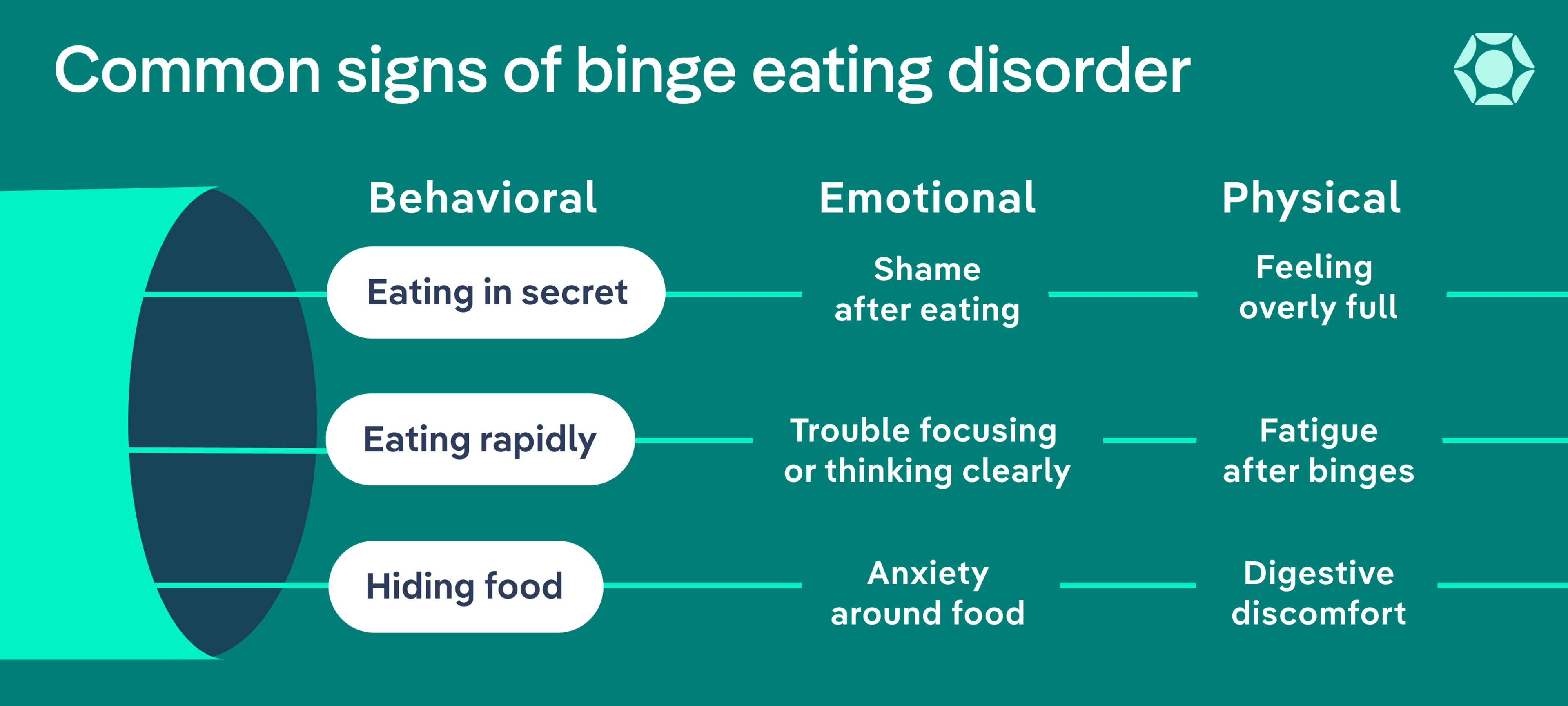
- Symptoms of BED can be behavioral (secrecy around food and binge episodes), emotional (guilt or shame surrounding food), or physical (feeling painfully full, for example).
- Treatment is available and recovery is possible with the help of a knowledgeable care team.

Everyone overeats from time to time, whether it’s finishing off a pint of ice cream after a bad day, wanting to sample everything at a new restaurant, or indulging at special occasions where food takes center stage.
If overeating is a regular occurrence for you, however, you may have asked yourself, Is this binge eating disorder or am I just overeating? You may have also asked this question about a loved one.
Binge eating disorder (BED) is different from general overeating. BED involves regular episodes of binge eating, in which a person feels out of control with food and eats a large amount in a short period of time to the point of becoming uncomfortably full. BED also involves intense and distressing feelings around food, often shame or guilt.
In contrast, when general overeating occurs, life goes on as usual. Overeating might lead to temporary gastrointestinal (GI) discomfort from feeling full, but it’s not accompanied by intense emotions or a sense of losing control.
In this article, we explore symptoms of binge eating disorder, how they are different from overeating symptoms, and when to get help.
How is binge eating disorder (BED) different from overeating?
We all overeat now and then, but BED is different. It is an eating disorder that involves feeling as if you have no control around food and having recurrent binge episodes followed by intense feelings of distress. BED is not defined by body size, and it is not about having a lack of willpower.
BED is a recognized mental health condition, as noted in the Diagnostic and Statistical Manual of Mental Disorder 5th Edition (DSM-5).
Binge eating vs. overeating
“Occasional overeating is a universal human experience,” says Jen Simmons, PhD, LPC, lead therapist at Equip Health. “It typically occurs in social or celebratory settings like a holiday gathering, enjoying a favorite dish, or accepting an extra serving from a well-meaning family member.”
She adds, “while it might cause temporary physical fullness or mild stomach discomfort, it lacks a heavy emotional aftermath. BED, which is currently the most prevalent eating disorder, is entirely different. It is defined by a distinct, psychological loss of control.” BED can include compulsive overeating as a symptom, however.
What are the signs and symptoms of binge eating disorder?
BED features a mix of behavioral, emotional, and physical symptoms, as detailed below.
Behavioral | Emotional | Physical |
Frequent binge eating (eating large amounts quickly) | Guilt after eating | Feeling overly full |
Eating faster than usual | Shame or embarrassment | Stomach discomfort or bloating |
Eating in secret | Distress about eating | Fatigue or sluggishness |
Avoiding social eating | Feeling out of control | Sleep problems |
Anxiety or frustration | Weight changes | |
Low self-esteem | Metabolic issues |
Behavioral symptoms of BED
The behavioral symptoms of BED include regular binge eating episodes. But these behaviors aren’t personal failures; they’re a compulsion and part of a recognized mental health condition.
We all overeat now and then, but BED is different. It is an eating disorder that involves feeling as if you have no control around food and having recurrent binge episodes followed by intense feelings of distress. A binge episode is defined by feeling unable to stop eating (or control what or how much you are eating), and/or consuming an unusually large amount of food in a short period of time (e.g., within 2 hours). BED is not defined by body size, and it is not about having a lack of willpower.
“During a binge,” Dr. Simmons says, “an individual often continues to eat rapidly and long after feeling full, experiencing an out-of-body sensation where they feel unable to stop or pace themselves.”
Behavioral symptoms explained:
- Eating unusually large amounts of food in a short time: This is not about just eating lots of food in one day. Rather, it is about bingeing, as defined above.
- Feeling unable to stop or control eating during a binge: Binge episodes don’t have to do with willpower. Instead, physiological and psychological drivers perpetuate the behavior.
- Eating much faster than usual: Binge episodes typically involve eating rapidly without taking time to chew thoroughly or assess hunger and fullness cues.
- Eating alone or in secret: Instead of eating large amounts at a gathering, binging typically occurs in private.
- Binge eating regularly (not just occasionally): In the DSM-5-TR, the required frequency for a BED diagnosis is experiencing binge episodes at least once a week for 3 months
- Avoiding social situations involving food: Feeling a lack of control around food can make you avoid events or occasions where eating is expected.
Emotional symptoms of BED
The emotional symptoms of BED involve intense distress and feeling out of control around food. These emotions aren’t your fault—they often have complex roots, and binge behaviors amplify them. Hard emotions can also be binge eating triggers, perpetuating the cycle.
“Unlike normal overeating,” Dr. Simmons says, “BED can be a response to deep emotional distress. When we experience severe stress, anxiety, or painful emotions, our brains naturally search for a way to self-soothe.”
“Eating triggers a release of positive neurotransmitters that temporarily create feelings of comfort and satiety, essentially turning food into an emotional thermostat,” she adds. “This creates a complex, painful cycle. While occasional overeating passes without emotional concern, BED leaves behind a long-lasting wake of distress.”
Emotional symptoms explained:
- Feeling guilt after eating: Guilt can center on the feeling that you “should” be able to just stop bingeing. But the truth is that BED is a mental health condition with complex physiological and psychological mechanisms at play. Bingeing is not something you can just “stop” by commanding yourself to do so.
- Experiencing shame or embarrassment: Diet culture perpetuates ideas about how we “should” eat, and BED leads to behaviors that are outside those perpetuated norms. This can lead to negative feelings. But again, BED is not your fault.
- Feeling distress related to binge eating: Sometimes, BED develops as a result of distress in life and can become a coping mechanism. It also leads to intense distress regarding meals and snacks and social situations that involve eating.
- Feeling out of control around food: This is a huge factor in BED. Binge eating is a compulsion. While loss of control is also a behavioral symptom of binge episodes, this feeling of being out of control around food can extend outside of binge behaviors and impact other parts of life.
- Experiencing anxiety, sadness, or frustration related to eating behaviors: Eating is naturally tied to your brain’s pleasure, reward, and motivation mechanisms. Anxiety and depression can trigger binge episodes, and likewise, binge episodes can trigger these mental health symptoms.
- Having low self-esteem or negative self-image: Intense feelings, such as shame, embarrassment or guilt, can impact how you feel about yourself.
Physical symptoms of BED
The physical symptoms of BED are somewhat unique to each person, though a few tend to be relatively common, such as feeling uncomfortably full after a binge. Body size, however, is not a commonality.
“A harmful misconception is that you can diagnose BED by looking at someone’s body size,” Dr. Simmons says. “Because individuals with BED do not engage in compensatory behaviors like purging, an outdated stereotype persists that BED only affects people in larger bodies. This is absolutely false. BED affects people of all ages, genders, racial backgrounds, and body types.”
She adds, “conversely, assuming someone in a larger body automatically has an issue perpetuates harmful weight stigma. A person’s weight does not reveal their health status or their relationship with food. Challenging these visual biases is essential if we want to ensure everyone receives the care they deserve, regardless of their size,”
Physical symptoms explained:
- Feeling uncomfortably full after binge eating: Since binge eating episodes involve eating a large amount of food in a short period and eating past the point of fullness, your body doesn’t have time to adequately digest the food, leading to discomfort.
- Experiencing gastrointestinal symptoms: In addition to feeling full, you might also experience GI symptoms, such as nausea, acid reflux, diarrhea, constipation, and more. These symptoms can add to shame and other forms of emotional distress.
- Weight fluctuations: Although body size or body mass index (BMI) is not an indicator of BED, the recurrent binge eating can result in weight changes.
- Feeling sluggish or fatigued after binging: Binge eating episodes are sometimes followed by an energy crash because of mechanisms related to blood sugar and insulin or from feeling full. Intense emotions can also contribute to feeling exhausted.
- Experiencing sleep disruption: Sleep disruption isn’t necessarily a guaranteed symptom, but binge eating prior to bedtime can lead to poor sleep quality, as can ongoing GI symptoms.
- Metabolic health concerns: Not everyone with BED experiences physical health concerns. But BED increases the risk of high blood sugar, which can lead to prediabetes, type 2 diabetes, and other metabolic health issues.
What’s the difference between binge eating disorder and bulimia nervosa?
Binge eating episodes can also be a part of other eating disorders, including other specified feeding and eating disorder (OSFED), anorexia nervosa (AN) binge-purge subtype, and bulimia nervosa (BN).
Bulimia nervosa involves binge eating episodes followed by behaviors meant to “get rid” of the food or prevent weight gain, known as purging. Purging behaviors may include throwing up, using laxatives, overexercising, fasting, and more.
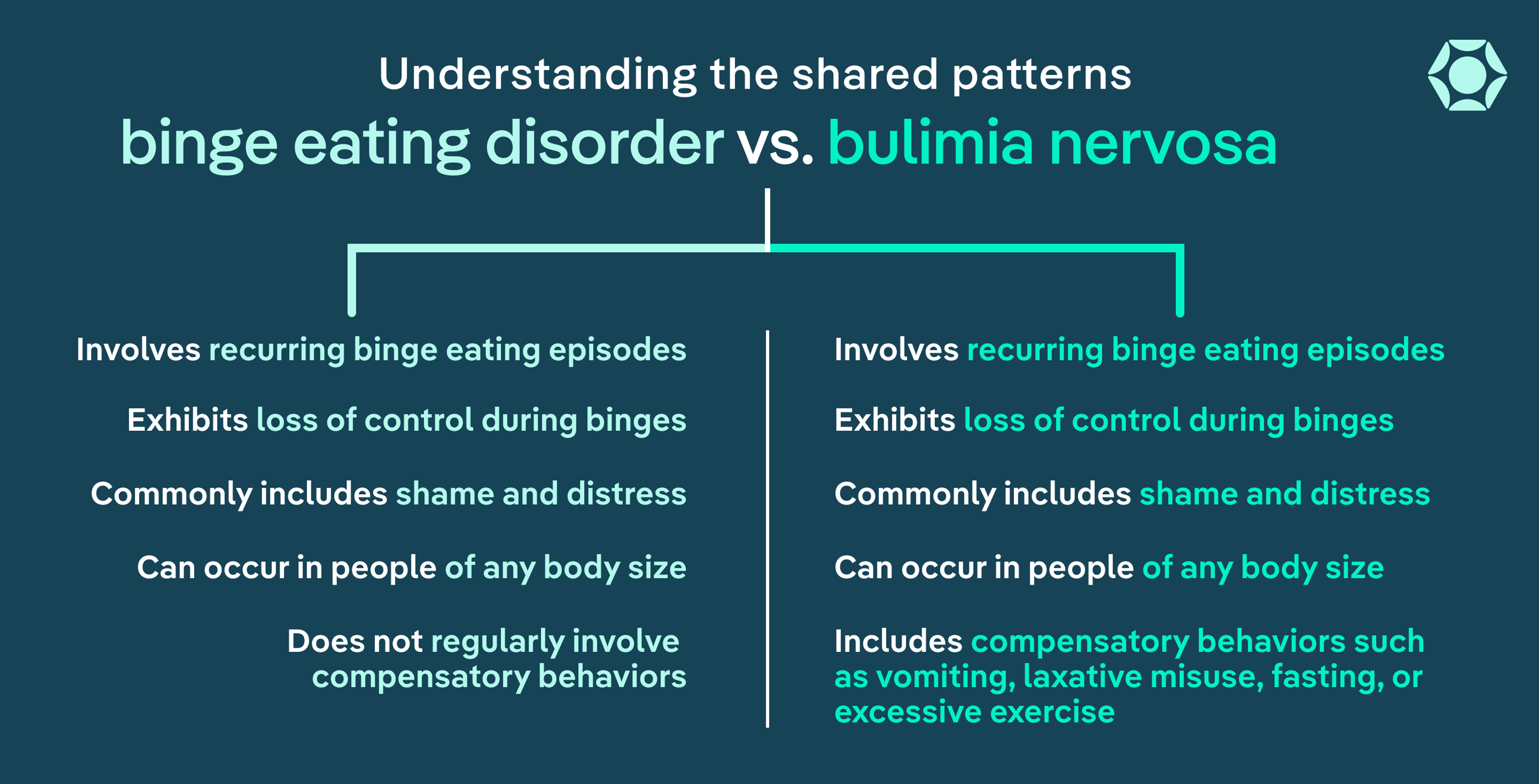
What’s the key difference between BED and bulimia nervosa? “The defining difference lies in what happens after the binge,” Dr. Simmons says.
She adds, “For individuals with bulimia, purging offers a fleeting sense of emotional relief or control, with some describing a profound desire to feel ‘empty’ inside. Over time, this becomes an addictive cycle, making it incredibly difficult to consume food without feeling an overwhelming urge to get rid of it.”
What do you do if you’re concerned about a loved one
If you’ve noticed some of these warning signs of binge eating disorder in a friend or family member, you’re right to be concerned.
You may be wondering how to talk to them in a loving and caring way about your concerns. This is an important step, albeit a challenging one.
“Initiating this conversation is vital because BED thrives on secrecy and isolation,” Dr. Simmons explains. “The disorder grows in the dark, feeding on the belief that one’s struggles must be hidden.”
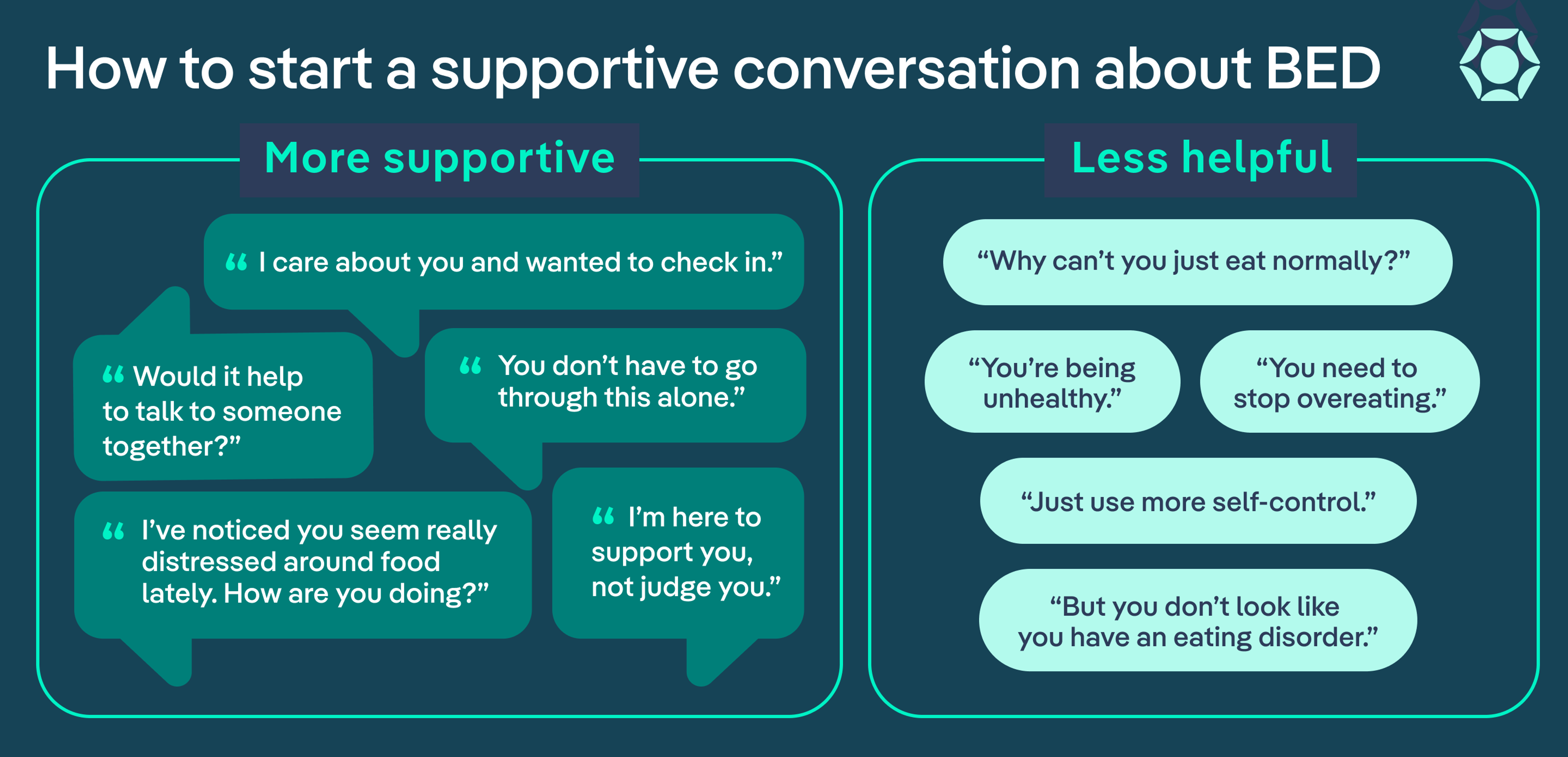
She adds that while your loved one might initially be distressed or defensive due to the shame associated with binge eating, these conversations also have the capacity to bring profound relief.
“By breaking the silence, you shatter the isolation,” she says. “You aren’t stepping in to police their eating habits, but rather to show them they no longer have to carry the overwhelming weight of this secret alone. Having the courage to start that conversation is truly the kindest thing you can do.”
So how do you start the conversation? “Often, the best approach is rooted in gentle honesty and observation, not judgment,” she says. “You might start by saying something like, ‘I've noticed some shifts lately, and it feels like you’re carrying a heavy burden. I love you. I see you suffering, and I want to help.’”
She adds that “recognizing that a loved one is struggling with BED requires looking beyond the food itself to notice shifts in their emotional and physical well-being.”
When (and how) to get help
If you’ve noticed BED symptoms in yourself or a loved one, you may be wondering when to seek help or how to encourage someone else to seek care. You can take this free five-minute symptom screener.
“Recognizing when to seek professional help for BED comes down to assessing how much mental and emotional space food is occupying,” Dr. Simmons says. “A primary red flag is a continuous cycle of frequent dieting or restriction followed by binge eating.”
She adds, “other critical signs include finding yourself actively planning out binge episodes, purchasing specific foods solely for a binge, or realizing you can no longer eat comfortably in public or around others.”
Seeking treatment for BED can feel overwhelming, but it is available without judgment, and recovery is possible. When seeking treatment, working with a multidisciplinary team of professionals who are eating disorder-informed is crucial. With BED in particular, treatment should not be weight-loss-focused, as that often backfires.
A care team for BED might include:
- A licensed mental health professional (such as a therapist) specializing in eating disorders
- A psychiatrist (if necessary) for medication management or treating multiple mental health conditions
- A recovery coach with expertise in BED who can offer peer support
- A registered dietitian to help navigate complex nutritional needs.
Equip offers individualized, evidence-based binge eating disorder treatment and can coordinate with external clinicians as needed. Schedule a call here to get started.
The bottom line
BED is a complex mental health condition characterized by regular binge eating episodes, feeling out of control around food, and emotional distress. But life doesn’t have to be this way for you or a loved one.
“Food should not be a source of constant distress, anxiety, or warfare,” Dr. Simmons says. “It should be an enjoyable part of life that nourishes and sustains our bodies. I often tell families that if someone sits down for a meal and experiences visible discomfort, anxiety, or hypervigilance around food, there is an underlying issue that needs to be addressed.”
She adds, “The most dangerous approach is waiting to see if it just goes away. Eating disorders are progressive. The longer they go untreated, the more deeply entrenched the behavioral patterns and psychological pathways become, making them harder to untangle. Fortunately, you do not have to figure this out alone.”
FAQ
How often do binge episodes have to occur to be considered BED?
In the DSM-5-TR, the frequency criteria for diagnosing BED is having binge episodes, on average, at least once a week for 3 months.
Can you have BED without gaining weight?
Yes, you can have BED without gaining weight. Body size, weight, and BMI are not part of the diagnostic criteria for this eating disorder.
How do I know if my eating pattern is serious enough to get help?
If food, food-related social situations, body image, or weight are creating distress for you, then getting help is important. You don’t have to look “sick” or appear a certain way to have an eating disorder or a disordered eating pattern. Eating disorders don’t go away on their own and generally get worse over time, so getting help as soon as you are concerned is essential.
Alagha, Michel, et al. “Binge Eating Disorder and Metabolic Syndrome: Shared Mechanisms and Clinical Implications.” Healthcare, vol. 13, no. 5, Feb. 2025, p. 482.
Da Luz, Felipe Q. da, et al. “An Examination of the Relationships between Eating-Disorder Symptoms, Difficulties with Emotion Regulation, and Mental Health in People with Binge Eating Disorder.” Behavioral Sciences, vol. 13, no. 3, Mar. 2023, p. 234.
Da Luz, Felipe Q., et al. “A Systematic Review with Meta-Analyses of the Relationship between Recurrent Binge Eating and Sleep Parameters.” International Journal of Obesity (2005), vol. 47, no. 3, Mar. 2023, pp. 145–64.
Giel, Katrin E., et al. “Binge Eating Disorder.” Nature Reviews. Disease Primers, vol. 8, no. 1, Mar. 2022, p. 16.
Mars, Jonathan A., et al. “Binge Eating Disorder.” StatPearls, StatPearls Publishing, 2026.
Rania, Marianna, et al. “Reactive Hypoglycemia in Binge Eating Disorder, Food Addiction, and the Comorbid Phenotype: Unravelling the Metabolic Drive to Disordered Eating Behaviours.” Journal of Eating Disorders, vol. 11, Sept. 2023, p. 162.