PCOS (Now PMOS) and Eating Disorders: What’s the Connection?


- PCOS, now called PMOS, is a systemic condition that affects metabolic health, hormonal health, and mental health, leading to a host of frustrating symptoms.
- Underlying mechanisms may contribute to disordered eating behaviors and the development of an eating disorder.
- Additionally, treatment often overemphasizes weight loss. This can also contribute to disordered eating and/or compensatory behaviors such as purging.
- Binge eating and bulimia nervosa are the most common eating disorders associated with PMOS, but they aren’t the only ones.
- If you or a loved one has both PMOS and an eating disorder, proper care should avoid a focus on weight and be highly individualized.

If you have been diagnosed with polycystic ovary syndrome (PCOS), recently renamed polyendocrine metabolic ovarian syndrome (PMOS), you might experience a mix of relief and frustration.
A diagnosis can help you understand what’s going on with your symptoms. But a diagnosis typically doesn’t come with a clear and simple solution for alleviating those symptoms. Symptoms can include unwanted facial and body hair growth, acne, weight gain, bloating, abdominal pain, fertility issues, and more.
Experts agreed on the recent renaming of PCOS to PMOS. The former name focused on the symptom of ovarian cysts. But the condition affects much more than your ovaries and reproduction. PMOS is a systemic (whole-body) syndrome that affects your metabolic, endocrine, reproductive, and mental health. Researchers say the old name contributed to stigma, delays in diagnosis, and fragmented care for the 10% to 13% of people assigned female at birth and of reproductive age who are estimated to have PMOS.
One lesser-known fact about the condition is that the underlying hormonal dysfunction associated with PMOS may drive eating disorders or disordered eating behaviors. Additionally, treatments for PMOS have historically focused heavily on lifestyle changes, including diet and exercise, and tend to overemphasize weight loss. This focus may be helpful in some cases. But frequently, it can exacerbate eating disorders.
In this article, we cover the connections between PMOS and eating disorders, including the outcomes of Equip’s own research on the topic.
How are PMOS and eating disorders connected?
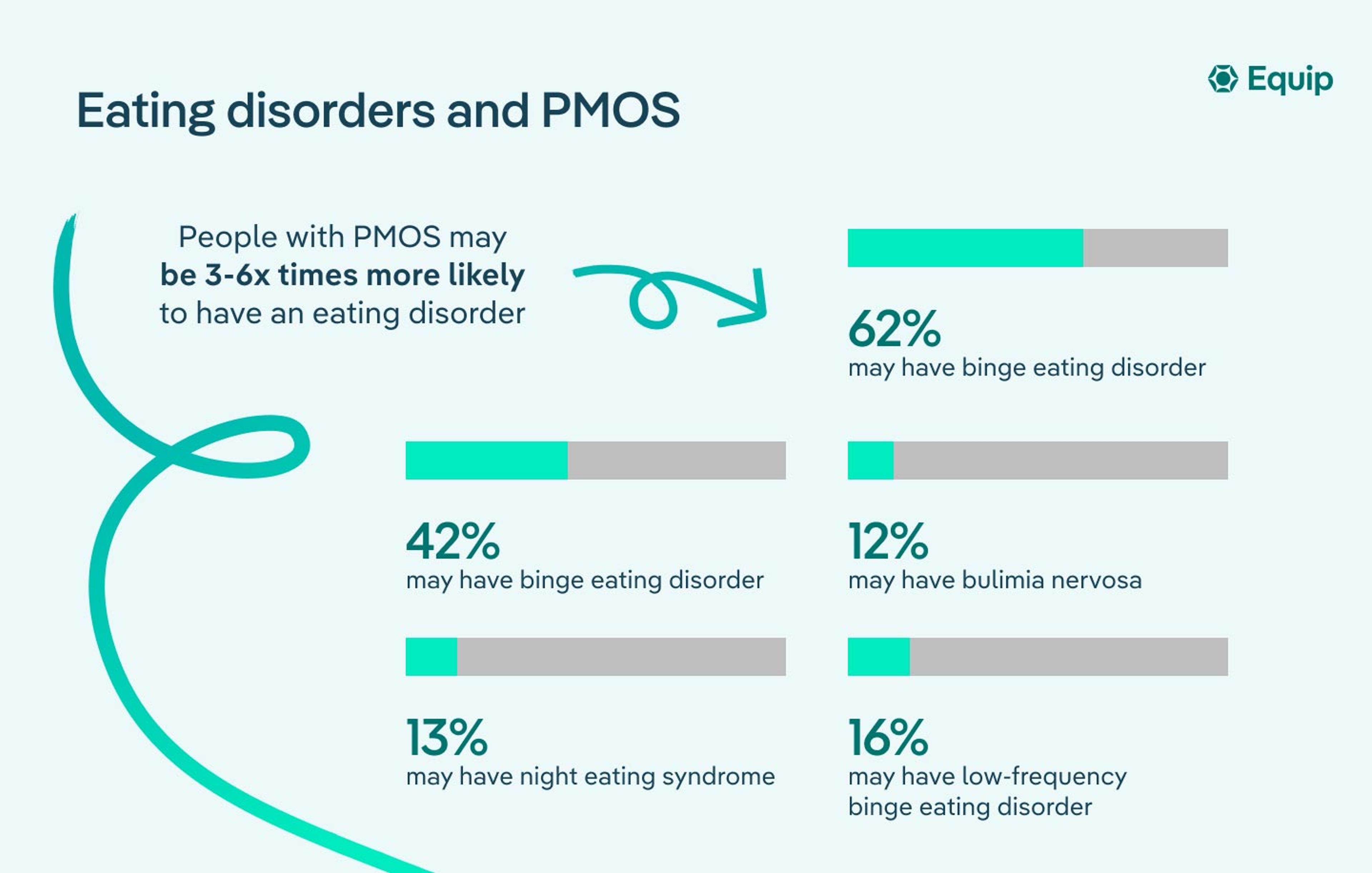
PMOS is connected to several eating disorders and disordered eating behaviors in a few ways. First, PMOS is a condition that affects your metabolic and reproductive hormones. These underlying mechanisms can impact metabolism, eating patterns, appetite and fullness signals, and more. And they could drive an eating disorder or disordered eating behaviors.
Additionally, treatments often focus on lifestyle changes, especially diet and exercise. This common hyperfocus on weight loss can worsen an existing eating disorder or lead to the development of one.
The metabolic link
PMOS affects metabolic health through insulin resistance, abnormal cholesterol and triglyceride levels, and high blood pressure, according to 2026 research published in the Journal of Internal Medicine.
Metabolic health and PMOS:
- Insulin resistance affects most people with PMOS, with estimates ranging from 75% to 95%. Insulin resistance can lead to type 2 diabetes. People with PMOS have three times the risk of developing the condition.
- Abnormal cholesterol and triglycerides affect about 60% to 70% of people with PMOS.
- High blood pressure risk is elevated in people with PMOS by two to three times compared with people who do not have the condition.
What is insulin resistance?
Insulin is a hormone that your pancreas produces. Your pancreas releases insulin into your bloodstream when your glucose (blood sugar) rises after eating, signaling to your cells to let glucose in. Once inside your cells, the glucose is either converted into energy you can use right away or stored for later. When your body doesn’t properly respond to insulin, the glucose can’t get into your cells, which causes high blood sugar. Over time, high blood sugar can lead to hyperinsulinemia (high insulin levels). Hyperinsulinemia can make your cells resistant to insulin’s signal, hence insulin resistance.
Insulin resistance and these other metabolic health factors can cause hormonal dysregulation (which we’ll get into more below). But the key thing to know is that these underlying mechanisms can contribute to changes in eating patterns, often because of disruptions to hunger and fullness signals. In some people, this can mean developing disordered eating behaviors.
Additionally, some of these metabolic health factors, especially insulin resistance, can contribute to weight gain, unwanted body and facial hair, and acne. These are just a few common PMOS symptoms. These symptoms can affect body image, also contributing to the eating disorder connection.
The hormonal link
Insulin resistance can have a domino effect on your ovaries and hormones. The hormonal dysfunction that ensues can also contribute to the link between PMOS and eating disorders.
A key issue in PMOS is hyperandrogenism (excess production of hormones known as androgens, such as testosterone). Hyperandrogenism is linked to the symptoms mentioned above, according to 2025 research published in the World Journal of Diabetes.
PMOS and hyperandrogenism:
- Hyperinsulinemia from insulin resistance encourages your ovaries to produce more androgens.
- Hyperinsulinemia also affects the liver, reducing production of sex hormone-binding globulin (SHBG). SHBG “binds” testosterone, preventing too much of it from becoming available to your body. With reduced SHBG production, the circulating level of free testosterone your body can use increases, adding to hyperandrogenism.
PMOS also shares associations with disrupted hunger and fullness (satiety) signals. These disruptions may contribute to appetite and food cravings.
PMOS and appetite and food cravings:
- Leptin is a hormone that signals to your brain when you are satisfied from meals. Leptin may be increased in people with PMOS, which can lead to leptin resistance. Insulin resistance can also contribute to leptin resistance. This means your brain responds less strongly to leptin’s signal that you’re full. This could lead to overeating.
- Ghrelin is a hormone that signals to your brain that you are hungry. Research is still ongoing as to how ghrelin levels are affected in people with PMOS. This hormone should decrease after you eat, but people with PMOS may have a blunted decrease. This could drive appetite even after a satisfying meal.
- Insulin resistance can also contribute to appetite changes, including frequent hunger or specific cravings. This is because when insulin resistance is present, your cells have trouble using energy effectively. Insulin resistance can also contribute to blood sugar swings (highs followed by lows) that can drive cravings.
Disruptions in hunger and satiety hormones and insulin may contribute to the development of eating disorders, according to 2026 research published in the journal Neuroscience and Biobehavioral Reviews.
The psychosocial link: weight stigma and “just lose weight” advice
PMOS is a complex condition. It drives weight gain in some (while not in others). Additionally, society and even some misinformed healthcare providers sometimes blame PMOS on lifestyle choices in people who have insulin resistance, type 2 diabetes, high cholesterol, and high blood pressure.
More research is needed on how and when these metabolic concerns first occur, but existing research suggests these abnormalities in metabolic health are present in childhood for people who have PMOS. In other words, these issues aren’t about a lack of willpower.
The stigma is real, though. It may contribute to feeling like you’re not “working hard enough” to “fix” issues that aren’t your fault. Treatments also focus on addressing these metabolic health issues through lifestyle. This may contribute to an eating disorder or disordered eating behaviors.
People who have PMOS often live in larger bodies and may experience weight stigma, or discrimination and stereotyping based on body size, explains Jessica Baker, PhD, a clinical psychologist and eating disorder researcher.
Treatments for PMOS tend to focus on weight loss through diet and exercise. Research shows this focus can add to stigma. It may also contribute to eating disorders.
“If someone has PMOS and an eating disorder—diagnosed or undiagnosed—and you tell them to focus on weight loss and dieting, you could worsen their disordered eating habits,” says Laura Cooney, MD, MSCE, associate professor of reproductive endocrinology and infertility at the University of Wisconsin. “Plus, you aren’t treating them as a whole person who has both of these conditions.”
“It could also lead to increased shame or guilt if they’re trying to lose weight but are having trouble reaching the goal their healthcare provider set,” Baker adds. Shame or guilt could also drive emotional eating, bingeing, food restriction, intrusive thoughts about food, or compensatory behaviors, such as purging, overexercising, laxative misuse, and more.
To be clear, research shows that lifestyle changes can help with PMOS. But care should be individualized to each person with PMOS by a multidisciplinary team that includes a registered dietitian, and it should not focus on weight.
“There’s no conclusive evidence that someone’s weight is causing PMOS and that if they lose weight, their PMOS symptoms will go away,” Baker says.
Which eating disorders are most associated with PMOS?
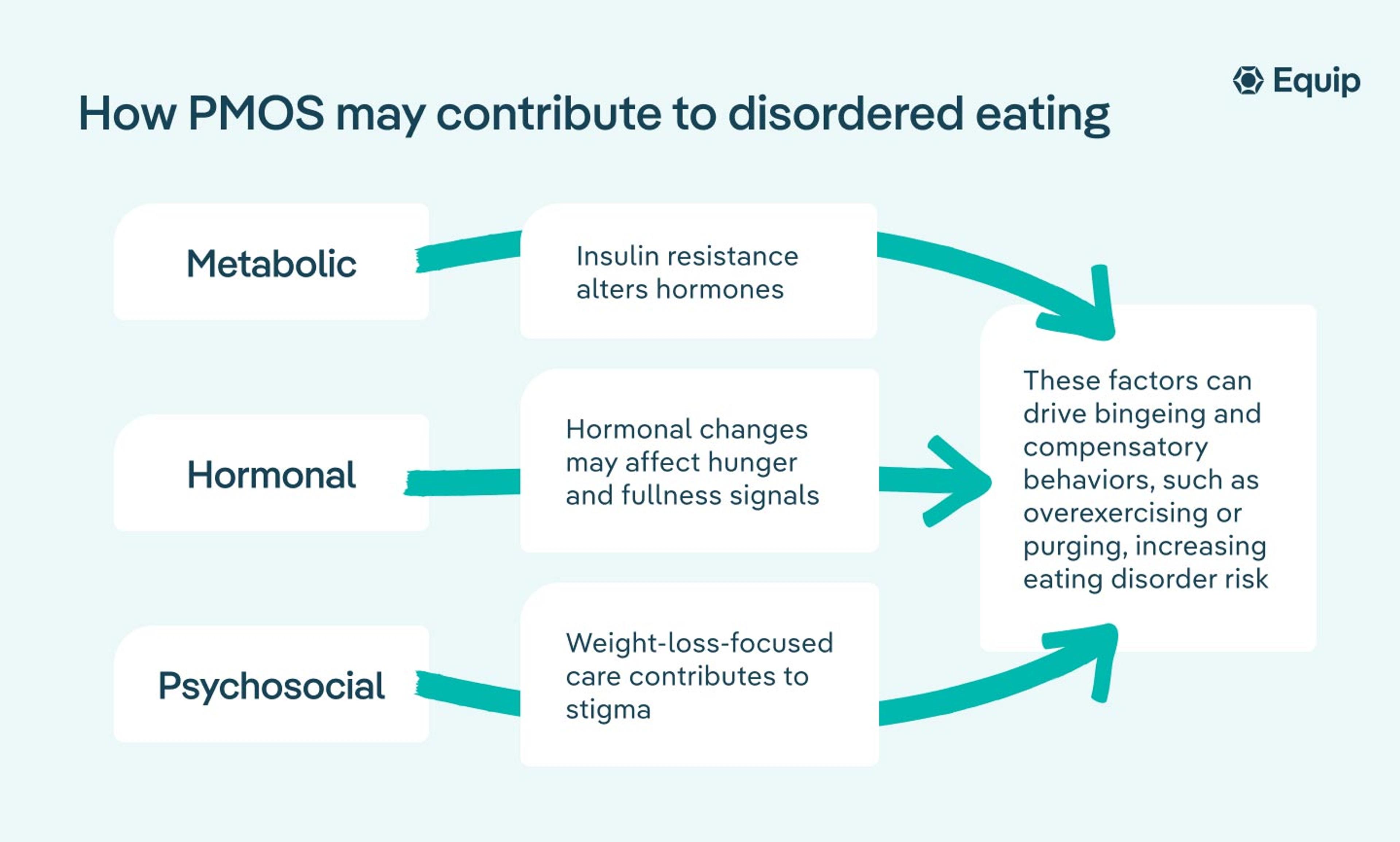
The eating disorders most associated with PMOS are binge eating disorder and bulimia nervosa, but other eating disorders are also linked with the condition, according to 2024 research published in the journal Advances in Nutrition.
The statistics:
- Up to 62% of people with PMOS may have an eating disorder, based on various studies.
- People with PMOS may be three to six times more likely to have an eating disorder when compared to those without the condition.
- Up to 42% of people with PMOS may have binge eating disorder.
- Up to 12% of people with PMOS may have bulimia nervosa.
- Up to 3.5% of people with PMOS may have anorexia nervosa.
Some research also points to a link between PMOS and other specified feeding and eating disorder (OSFED). OSFED is really an umbrella term used for diagnosing an eating disorder that doesn’t meet the full criteria for a separate diagnosis.
OSFED and PMOS statistics:
- More than 9% of people with PMOS may have low-frequency bulimia nervosa.
- Up to 16% of people with PMOS may have low-frequency binge eating disorder.
- More than 1% of people with PMOS may have purging disorder.
- Nearly 13% of people with PMOS may have night eating syndrome.
What Equip’s research reveals about PMOS and eating disorders
Recently, Equip partnered with Women’s Health magazine to conduct a survey exploring the connection between PMOS and eating disorders. The research was published in September 2026.
The survey included more than 1,000 people with PMOS, and the results reveal a stark and concerning link between the diagnosis and disordered eating. Below is a summary of the key takeaways:
PMOS and eating disorders:
- More than 55% screened positive for a potential eating disorder.
- Nearly 13% reported having a formal eating disorder diagnosis.
- Binge eating disorder was the most common diagnosis reported.
PMOS and mental health:
- More than 37% met the criteria for depression.
- More than 48% met the criteria for anxiety.
- More than 60% reported shame or embarrassment about their eating habits.
- Many reported living with shame and embarrassment in general, and that judgment from family and healthcare providers exacerbated these feelings.
- Many reported a negative body image and poor self-esteem.
Stigma, delayed diagnosis, and too much focus on weight as part of treatment:
- About 21% reported a delay of more than five years in receiving a diagnosis.
- About 43% said providers attributed their symptoms to weight gain rather than assessing them for potential PMOS.
- About 40% reported putting off necessary medical care because of their past negative experiences with the healthcare system.
- More than 48% reported that weight loss was the focus of their care.
- More than 60% reported that their providers never discussed the mental health aspects of living with PMOS.
Signs of disordered eating when you have PMOS
If you or a loved one has PMOS, you might be looking for signs of disordered eating or exercise behaviors that could indicate a potential eating disorder. An important caveat is that you don’t have to “look sick” to have an eating disorder or need treatment.
One quick way to determine if there’s cause for concern is to take Equip’s free eating disorder screener.
How to treat PMOS and eating disorders together
Treating PMOS and an eating disorder together requires a multidisciplinary care team that’s well-versed in eating disorders and can individualize care to your unique circumstances.
Factors may include looking at your specific PMOS symptoms and how they affect you, which eating disorder or disordered eating behaviors you have, which other mental health concerns are present, and more.
“Nothing with our bodies occurs in isolation, so just focusing on weight or diet or just giving medication isn’t necessarily going to be helpful,” Baker says. “We need to consider the person’s whole identity—their mind, body, spirit, and soul—and the whole of their experiences: their environment and stressors. We can't look at just one thing in a vacuum.”
“Awareness is so important,” Cooney adds. “If you have someone with PMOS and an eating disorder, any treatment needs to focus on the eating disorder first.”
For providers, it’s important to note that most patients won’t come out and say, “I have an eating disorder,” so it's the job of the provider to open the lines of communication and remain nonjudgmental. These guidelines on screening best practices can be helpful for clinicians.
Many providers subconsciously hold weight biases, and some may prescribe weight loss for PMOS, both of which can be especially harmful if you’re dealing with disordered eating. If you’re a provider, you should be aware of subconscious weight bias — and that focus on weight loss can exacerbate eating disorders. If you’re struggling yourself, try to find providers who offer a weight-neutral or health at every size (HAES) approach.
“HAES says folks can be healthy at any weight or size,” Baker explains. “What needs to be the focus are additional metrics of health, like hormonal levels, metabolic factors, glucose levels, thyroid health, cardiac risk, those sorts of things.”
The bottom line
PMOS is linked to eating disorders and disordered eating behaviors. The connection between the conditions is complex. But factors such as how PMOS affects metabolic health and hormonal health, the experience of living with PMOS, and weight-focused treatment protocols can all contribute to eating disorders or disordered eating behaviors.
If you or a loved one has PMOS and concerns about disordered eating, help is available and recovery is possible. A multidisciplinary care team, as you will find at Equip, can help you treat both.
FAQ
Why was PCOS renamed PMOS?
PCOS was renamed PMOS, which stands for polyendocrine metabolic ovarian syndrome. The former name focused on the symptom of ovarian cysts and reproduction, which led to stigma, delays in diagnosis, and fragmented care. PMOS is a systemic (whole-body) syndrome that affects metabolic, endocrine, reproductive, and psychological health.
Does PMOS cause eating disorders?
PMOS doesn’t directly cause eating disorders, but it does affect your metabolic and hormonal health. Changes to hormones can affect appetite, leading to disordered eating patterns or behaviors or an eating disorder. Binge eating disorder and bulimia nervosa are the most common eating disorder diagnoses associated with the condition. But other diagnoses also occur in people with PMOS.
Is it common to binge with PMOS?
Yes, bingeing appears to be common with PMOS. Up to 42% of people with PMOS have binge eating disorder. People with PMOS also sometimes have what’s called low-frequency binge eating disorder, meaning they don’t meet the full criteria for binge eating disorder but they do have binge eating episodes. Bingeing is driven by complex hormonal changes, among other factors, and is not about a lack of willpower.
Cebeci, Filiz, et al. “Insulin Resistance in Women with Hirsutism.” Archives of Medical Science: AMS, vol. 8, no. 2, May 2012, p. 342.
Dagogo-Jack, Sam. “Leptin and Insulin Sensitivity: Endogenous Signals of Metabolic Homeostasis.” The Journal of Clinical Endocrinology & Metabolism, vol. 109, no. 5, Apr. 2024, pp. e1402–03.
Forslund, Maria, et al. “Recent Advances in Polyendocrine Metabolic Ovarian Syndrome, Formerly Polycystic Ovary Syndrome, with Emphasis on Endocrine and Metabolic Dysfunction and Cardiovascular Risk.” Journal of Internal Medicine, vol. 300, no. 5, Nov. 2026, pp. 590–609.
Hasrat, Nazik H., and Asaad Q. Al-Yassen. “The Relationship Between Acne Vulgaris and Insulin Resistance.” Cureus, vol. 15, no. 1, Jan. 2023, p. e34241.
Krug, Isabel, et al. “Binge Eating in Patients with Polycystic Ovary Syndrome: Prevalence, Causes, and Management Strategies.” Neuropsychiatric Disease and Treatment, vol. 15, May 2019, p. 1273.
Lalonde-Bester, Sophie, et al. “Prevalence and Etiology of Eating Disorders in Polycystic Ovary Syndrome: A Scoping Review.” Advances in Nutrition, vol. 15, no. 4, Apr. 2024, p. 100193.
McGowan, Margaret, et al. “Exploring Lifestyle Management in Polycystic Ovary Syndrome through Implementation Frameworks.” Experimental Physiology, Aug. 2026, p. 10.1113/EP092880.
Peng, Yuanyuan, et al. “Elevated Serum Leptin Levels as a Predictive Marker for Polycystic Ovary Syndrome.” Frontiers in Endocrinology, vol. 13, Mar. 2022, p. 845165.
Rambaran, Neervana, and Md Shahidul Islam. “Decoding Androgen Excess in Polycystic Ovary Syndrome: Roles of Insulin Resistance and Other Key Intraovarian and Systemic Factors.” World Journal of Diabetes, vol. 16, no. 7, July 2025.
Shidane, Abdinasir Adam, et al. “From Polycystic Ovary Syndrome to Polyendocrine Metabolic Ovarian Syndrome: Rationale, Evidence, and Implications of a Global Name Change.” Frontiers in Global Women’s Health, vol. 7, Aug. 2026, p. 1881840.
Stefanaki, Katerina, et al. “Food Cravings and Obesity in Women with Polycystic Ovary Syndrome: Pathophysiological and Therapeutic Considerations.” Nutrients, vol. 16, no. 7, Apr. 2024, p. 1049.
Teede, Helena J., et al. “Polyendocrine Metabolic Ovarian Syndrome, the New Name for Polycystic Ovary Syndrome: A Multistep Global Consensus Process.” The Lancet, vol. 407, no. 10545, June 2026, pp. 2329–39.
Xu, Wenting, et al. “The Neuroendocrine-Appetite-Mental Health Triangle in PMOS: Implications for GLP-1 Receptor Agonist Therapy.” Neuroscience & Biobehavioral Reviews, vol. 189, Oct. 2026, p. 106846.