Understanding Diabulimia: When Diabetes and Disordered Eating Overlap


- Diabulimia is a condition in which people with type 1 diabetes restrict insulin to control their weight.
- It puts you or a loved one at risk for severe illness and even death.
- Warning signs include weight loss, fatigue, secrecy, and changes in eating habits.
- Although diabulimia is scary, recovery is possible with a multidisciplinary team specializing in disordered eating care.
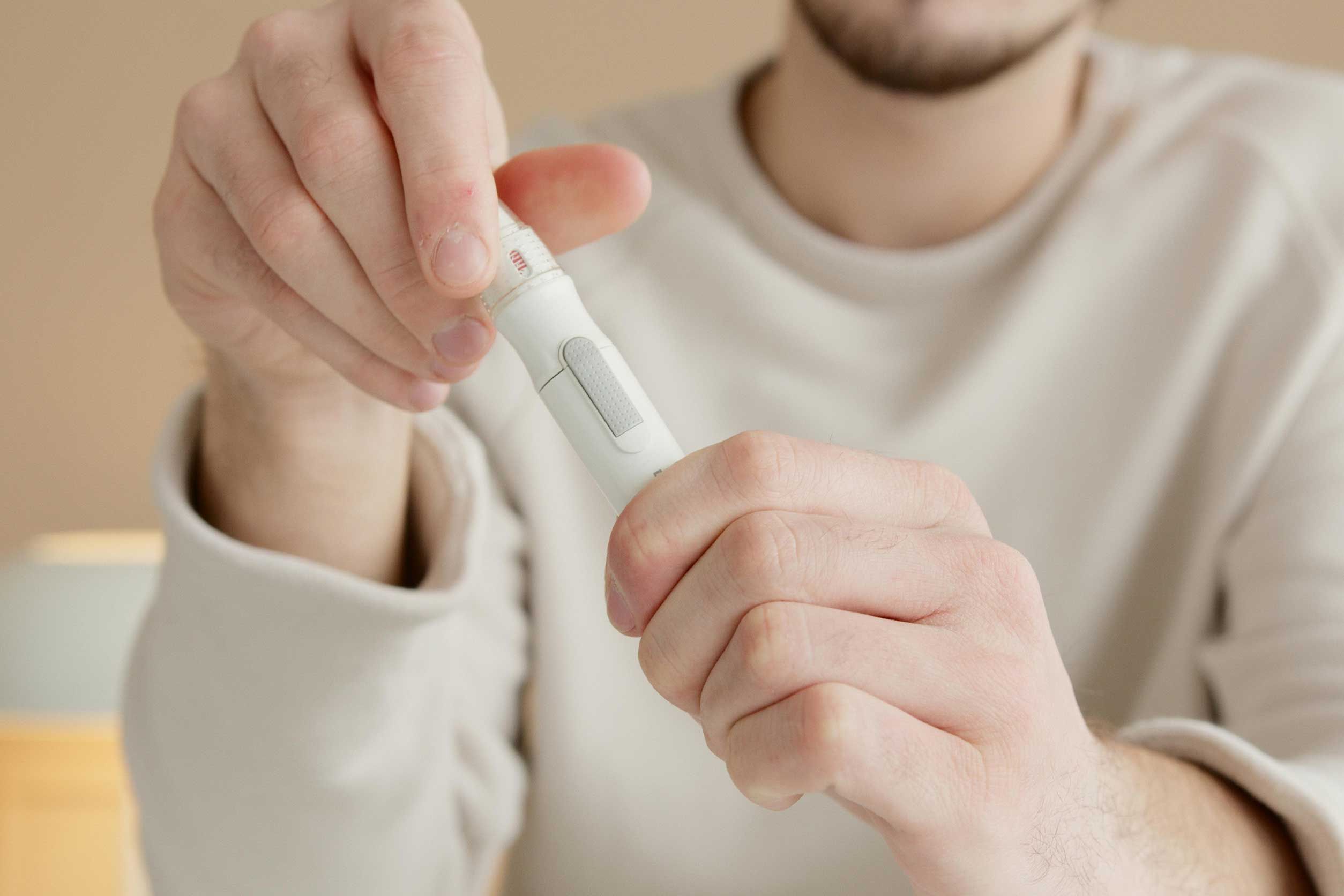
Managing type 1 diabetes can feel like a full-time job. It requires near-constant daily decisions about food intake, blood sugar and insulin management, activity levels, and more. This constant focus on food can lead to the development of disordered eating behaviors, including “diabulimia.”
Diabulimia is a term used to describe restricting or skipping insulin doses to avoid weight gain. It is not a formal eating disorder diagnosis, but it is a dangerous practice that can lead to serious physical and mental health concerns. Because insulin is a life-saving medication for those with type 1 diabetes, abusing it can lead to serious—and potentially fatal—complications. But with the right specialized care, anyone struggling with diabulimia can find lasting recovery and sustainable health.
In this article, we explore diabulimia symptoms, diabulimia treatment, and more.
What is diabulimia?
Diabulimia is a term used to describe insulin-dose restriction or avoidance in people with type 1 diabetes to control weight.
Type 1 diabetes is an autoimmune condition in which the pancreas does not make enough or any of the hormone insulin. Insulin is generally required for cells to be able to access and use energy from foods, so those with type 1 diabetes need to take insulin medication in order for their bodies to function.
Insulin also promotes energy storage and body mass increases. Restricting insulin means a person’s body cannot access the vast majority of the energy or nutrients in the food they eat, leading to weight loss—alongside serious physical consequences.
“For those living with type 1 diabetes, restricting insulin is functionally synonymous with starvation,” says Tanya Hargrave-Klein, MS, RDN, LD, a dietitian at Equip.
She adds, “Experts describe insulin as a biological key required to unlock the body’s cells. Without it, glucose remains trapped in the bloodstream, unable to be converted into vital energy. This metabolic breakdown leads to dangerously elevated blood sugar levels, leaving cells effectively famished despite the presence of nutrients.”
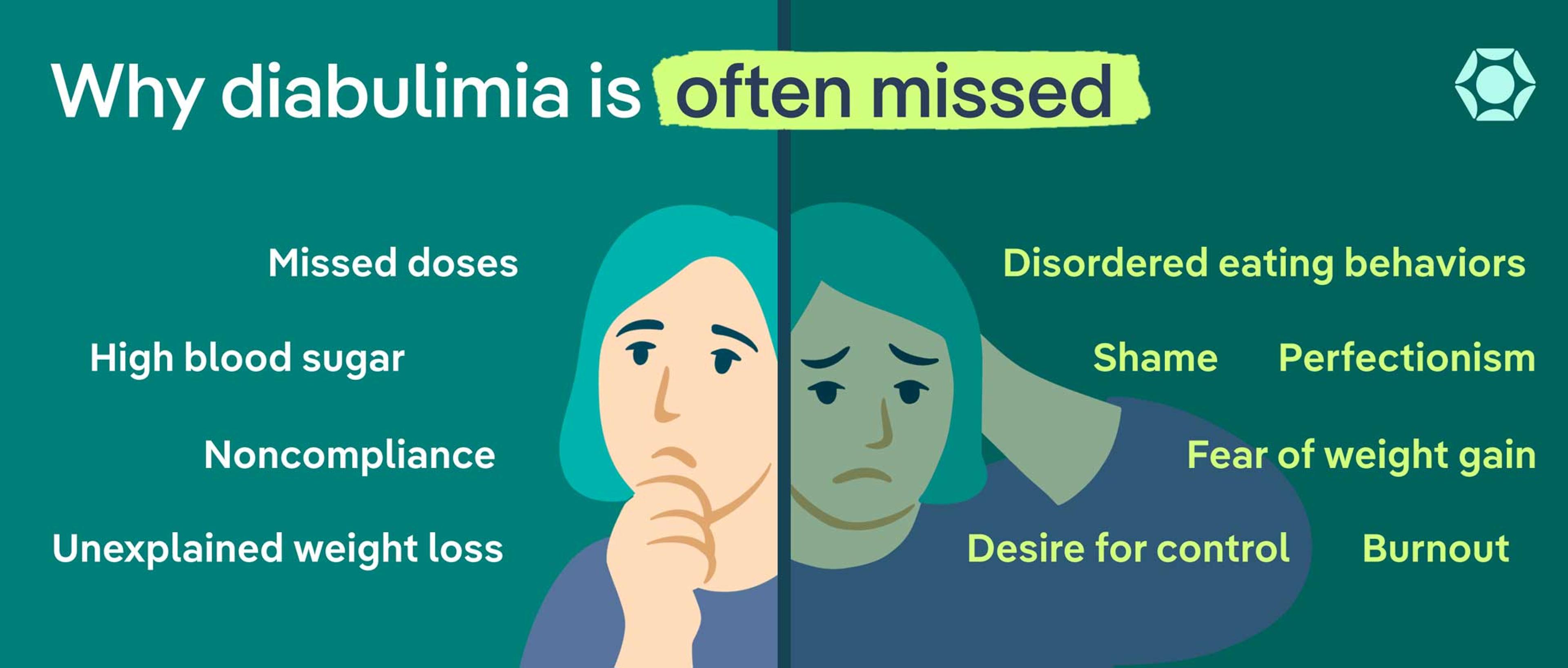
What happens in your body when insulin is restricted:
- When we eat, glucose rises in the bloodstream.
- In people without diabetes, the pancreas releases insulin.
- If you have type 1 diabetes, you need to take insulin because your body doesn’t make it—or enough of it.
- Insulin acts like a key that unlocks cells, allowing glucose to be either stored or used right away for energy.
- This lowers glucose in your bloodstream.
- Without insulin, glucose generally cannot get into cells for energy storage or use.
- With cells not able to use glucose effectively, your body must break down fat and muscle for fuel, leading to weight loss.
- The breakdown of fat produces ketones in the liver, which can reach high levels in the bloodstream.
- Ketones are acidic, and a buildup can lead to diabetic ketoacidosis (DKA), a life-threatening issue.
- Glucose also stays high in your bloodstream, where it can reach dangerous levels that harm tissues and organs.
Is diabulimia an eating disorder?
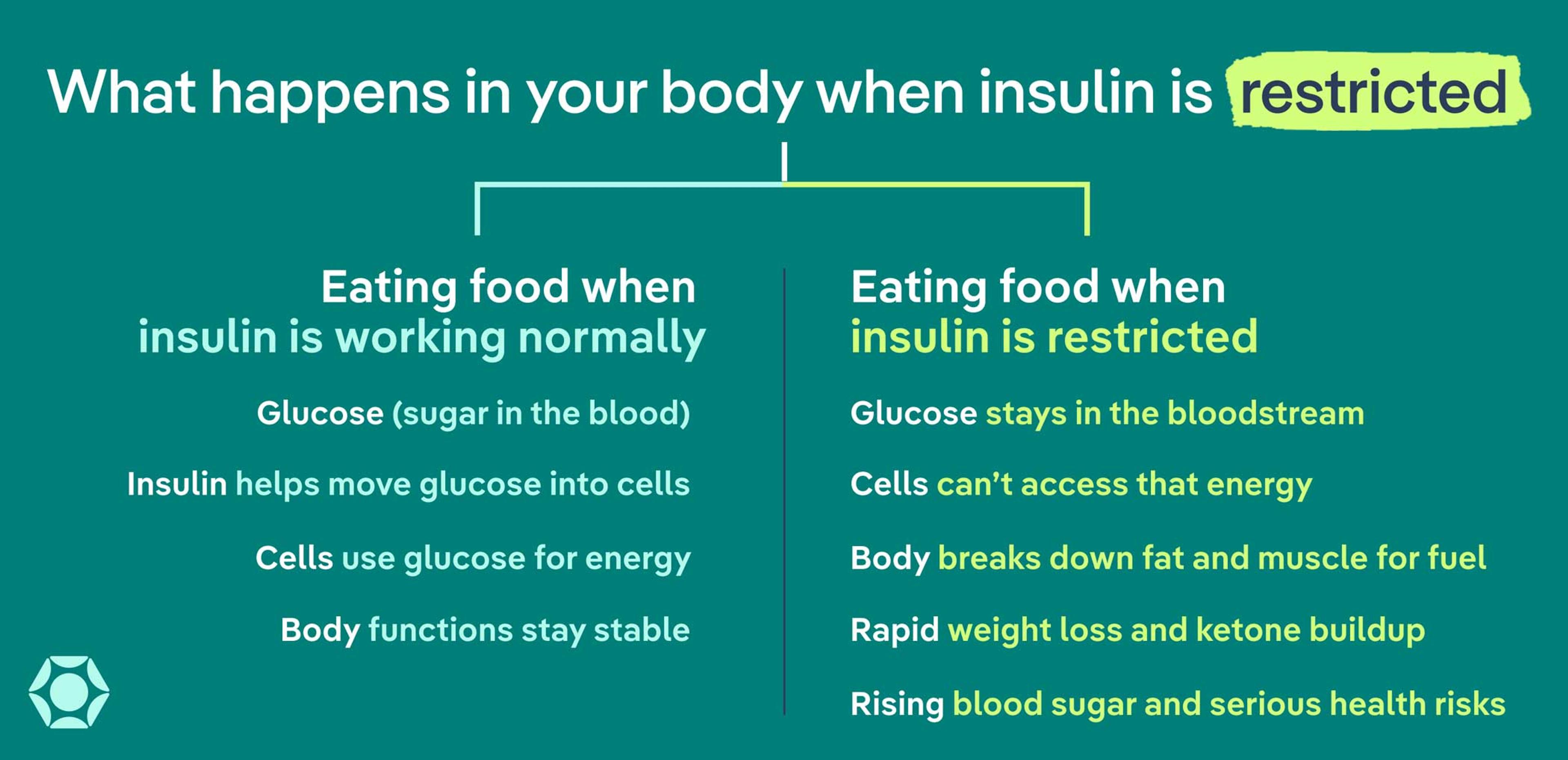
Diabulimia is not an official eating disorder diagnosis in the Diagnostic and Statistical Manual of Mental Disorders (DSM). Instead, insulin restriction is classified as a disordered eating behavior.
What about type 2 diabetes and diabulimia?
Diabulimia can occur with type 2 diabetes as well, but there are distinctions.
Everyone with type 1 diabetes needs to take insulin medication; not everyone who has type 2 diabetes needs insulin therapy.
But since diabulimia is characterized by purposely altering your insulin administration, people with type 2 diabetes who take insulin can develop diabulimia. The behavior is the same—restricting insulin in an attempt to control weight—regardless of whether a person has type 1 or type 2 diabetes.
How common is diabulimia?
The prevalence of diabulimia is unclear. However, a 2024 review of 14 studies found that about 10% of people with diabetes restrict or misuse insulin.
This is especially true for people assigned female at birth. Another 2024 review article suggests that 20% to 30% of adolescent and up to 40% of adult females with type 1 diabetes have also experienced diabulimia.
We also know that people with type 1 diabetes are more likely to develop eating disorders than people who don’t have the condition.
How diabulimia works in the body and brain
Insulin allows cells to uptake glucose to use as fuel or store for later. In people with diabetes, insulin restriction leads to weight loss because it forces your body to break down fat and muscle to be used for energy.
“Whether categorized as dieting, dietary restriction, or restrained eating, the core mechanism remains the same,” Hargrave-Klein says. “An individual consumes less energy than they expend.” Insulin restriction leads to an energy deficit, which leads to weight loss.
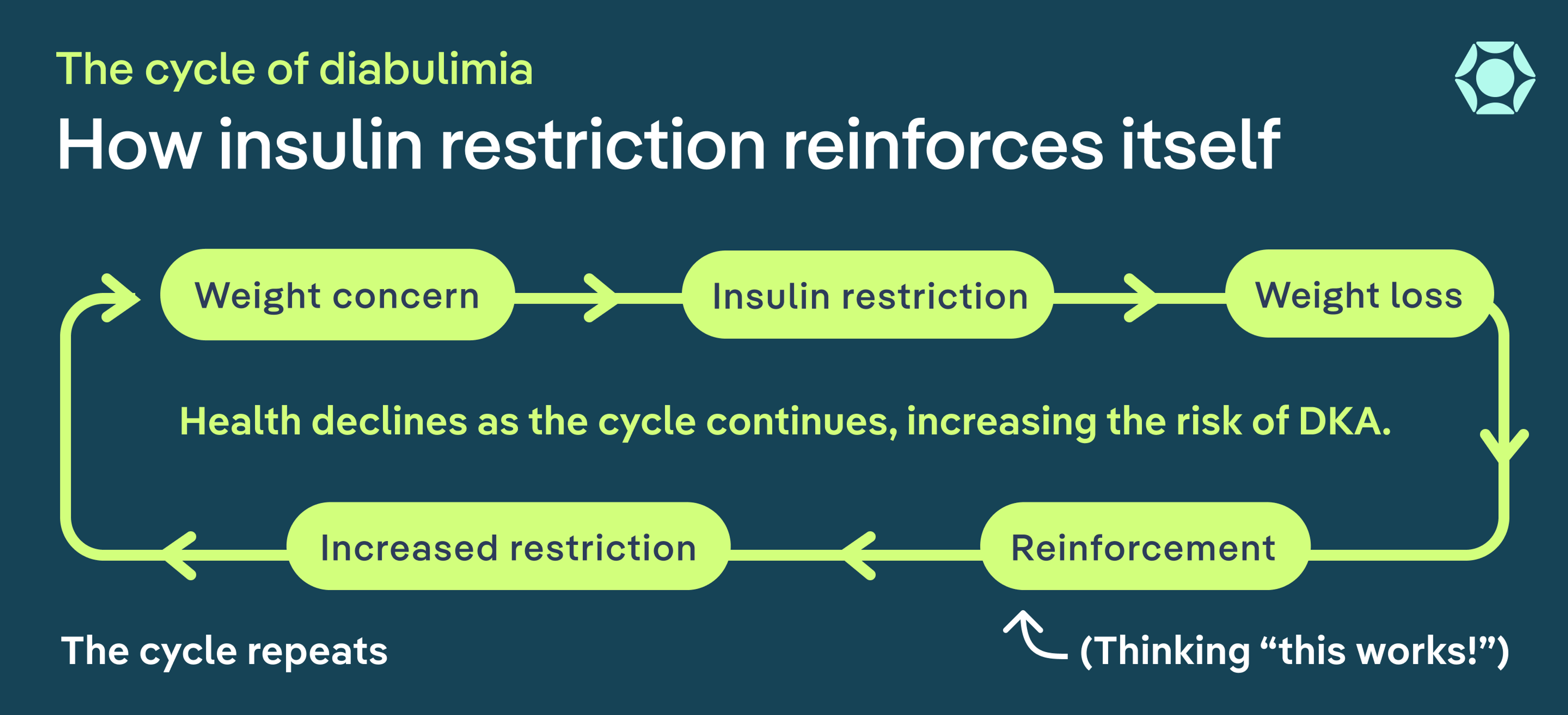
Diet culture tends to champion any type of weight loss, so weight loss from insulin restriction might feel rewarding. The feeling of “accomplishment” reinforces the insulin-restricting behavior. This causes a psychological loop that leads to more insulin restriction and more weight loss.
“As the deficit deepens and weight loss accelerates, the brain is deprived of essential fuel, precipitating fundamental shifts in its chemistry, structure, and function,” Hargrave-Klein says.
She adds, “An under-resourced brain gravitates toward rigidity, often manifesting as a preoccupation with food and obsessive, rule-based thinking. This psychological shift compels further restriction, creating a self-perpetuating cycle that is notoriously difficult to break without clinical intervention.”
Meanwhile, insulin deprivation drives high blood sugar, which can complicate things further. “When blood sugar remains chronically high,” Hargrave-Klein says, “medical professionals often advise stricter dietary limits to compensate. Such clinical guidance can inadvertently validate and strengthen the existing behavioral cycle.”
Additionally, insulin restriction drives high ketone levels, which can cause DKA, a medical emergency.
What are the signs and symptoms of diabulimia?
Diabulimia doesn’t always look like disordered eating. The early signs can be subtle and even praised as good behaviors.
“The historical emphasis on aggressively controlling diet, activity, weight, and insulin dosage in diabetes management creates a dangerous paradox,” Hargrave-Klein says. “For example, what appears to be a good-faith effort to maintain a healthy blood sugar level—such as fixating on food intake or diligently avoiding sugar—may, in reality, be disordered eating behaviors hidden in plain sight or cloaked in wellness culture.”
She adds, “This confusion is compounded when weight loss resulting from insulin withholding is often mistakenly lauded by health professionals as a positive step toward better glucose control, further obscuring the symptom of an emerging eating disorder. This insidious overlap makes it easy for genuine eating disorder behaviors to be explained away in individuals with diabetes.”
Here are the most common signs and symptoms of diabulimia.
Behavioral and emotional signs
- Skipping, reducing, or avoiding insulin doses intentionally to lose weight
- Obsession with body weight, calories, dieting, or body image
- Fear of weight gain from insulin use
- Frequently checking weight or expressing dissatisfaction with appearance
- Hiding diabetes management habits or lying about blood sugar readings
- Avoiding diabetes appointments or becoming defensive about diabetes care
- Eating in secret, binge eating, or feeling guilt or shame around food
- Mood swings, anxiety, depression, irritability, or social withdrawal
- Perfectionistic thinking or feeling “out of control” with diabetes management
Physical symptoms
- Frequent high blood sugar levels
- Increased thirst and frequent urination
- Unexplained weight loss
- Fatigue or low energy
- Blurred vision
- Headaches
- Dry skin or dehydration
- Frequent infections, especially yeast infections or urinary tract infections
- Nausea or stomach pain
- Fruity-smelling breath caused by ketones
What causes diabulimia?
As with all disordered eating or eating disorders, diabulimia can have several causes. Here are some common reasons it develops.
- Body image concerns: Insulin treatment often causes weight gain. This weight gain is healthy and necessary, but it can cause body image struggles, which can then lead to a desire to lose weight.
- Restrictive diets: Diabetes management sometimes requires dietary restrictions, and those who are predisposed to disordered eating patterns may find this triggering.
- A desire for control: Having a chronic illness like diabetes can make you feel like you have no control over your body. Restricting insulin can create a feeling of control.
- A focus on numbers: Diabetes management requires a heavy focus on numbers, whether for blood sugar readings, food labels, or other metrics. This focus can lead to a preoccupation with monitoring weight.
- Perfectionism: Perfectionism is a trait associated with eating disorders, and diabetes management can exacerbate this trait.
What are the health risks of diabulimia?
Diabulimia causes serious risks. “The most immediate danger is DKA, a life-threatening acute complication,” Hargrave-Klein says. “A severe lack of insulin forces the body into starvation mode, burning fat for energy and unleashing ketones into the bloodstream. As even a minor pH alteration can shut down organ systems, the resulting blood acidity associated with DKA can lead to coma and, tragically, death.”
High glucose also presents complications. “Diabulimia's toll is swift and catastrophic, inflicting severe and often irreversible damage on the body,” Hargrave-Klein says. “When insulin is withheld, the body is flooded with relentlessly circulating glucose, resulting in dangerously high blood sugar levels. This chronic toxicity gradually damages organs.”
According to Hargrave-Klein, here’s what that damage could look like:
- Vision is threatened as blood vessels leak into the eyes, causing irreversible impairment.
- Nerve damage leads to tingling and numbness in the hands and feet, potentially crippling mobility.
- Major organs are compromised, precipitating chronic kidney failure and cardiovascular disease.
Health risks and complications of diabulimia
- Recurrent episodes of DKA (DKA is a medical emergency)
- Hospitalizations related to uncontrolled diabetes
- Severe dehydration
- Fainting or dizziness
- Difficulty concentrating or confusion
- Neuropathy (nerve damage)
- Kidney problems
- Eye damage or vision loss
- Irregular or missed menstrual periods
- Muscle loss and extreme weakness
How do clinicians ‘diagnose’ diabulimia?
If you believe that you or a loved one might have diabulimia, seeking help is vital. The condition carries serious health risks and can be life-threatening.
Know that you may need to proactively reach out rather than wait for a doctor to say something, as endocrinologists may not realize what’s going on.
If you or a loved one are experiencing any of the symptoms discussed above, talk to a trusted doctor who can help you determine if you’re dealing with diabulimia, another disordered eating behavior, or an eating disorder. Equip offers an easy self-screening tool that can be a helpful start on your journey—or you can schedule a call with an Equip team member.
What does treatment for diabulimia look like?
If diabulimia is confirmed, then building a comprehensive care team is the next step.
“Treating diabulimia demands a dual focus—simultaneously addressing the life-threatening diabetes and the underlying eating disorder,” Hargrave-Klein says. “Effective intervention requires a dedicated, multidisciplinary team to manage the complex, entangled issues facing the patient.”
She recommends:
- An endocrinologist with expertise in eating disorders and diabetes
- A certified diabetes care and education specialist (CDCES) or dietitian who also has eating disorder expertise
- A mental health professional specializing in eating disorders who also has diabetes experience
- A psychiatrist (if necessary) for medication management or treating multiple mental health conditions
- A recovery coach with expertise in diabetes and eating disorders who can offer peer support
Equip Health offers individualized, evidence-based eating disorder treatment and can coordinate with external diabetes specialists for patients navigating diabulimia.
The bottom line
Managing type 1 diabetes is no easy feat. It requires monitoring your food intake and managing medications, including insulin. Taking insulin properly—which is vital and life-saving for those with type 1 diabetes—can lead to weight gain, which can be triggering.
Diabulimia is the dangerous practice of restricting or skipping insulin doses in order to lose weight. But diabulimia is incredibly dangerous because it leads to high blood sugar levels (which damages organs and tissues) and high ketone levels which can cause DKA, a life-threatening medical emergency).
If you or a loved one is struggling with diabulimia, help is available and recovery is possible. To start the healing process, it’s important to work with a multidisciplinary team that has expertise in both diabetes management and disordered eating.
FAQ
What are the long-term effects of diabulimia?
The long-term effects of diabulimia include damage to organs and tissues, and diabetic ketoacidosis (DKA), which is a medical emergency. Severe weight loss, malnutrition, and other symptoms can also occur.
Is diabulimia an official eating disorder diagnosis?
Diabulimia is not an official eating disorder diagnosis. It is a valid term used to describe the practice of restricting or skipping necessary insulin doses to lose weight. It is considered a disordered eating behavior.
Why do people restrict insulin?
Some people who need insulin will restrict it due to not being able to afford the high cost of the medication or having poor healthcare coverage. Other people restrict insulin to lose weight. Either way, the practice of insulin restriction is extremely dangerous. If you are restricting insulin in order to lose weight, talk to your doctor or an eating disorder specialist immediately. If you cannot afford your insulin, reach out to the manufacturer of the brand you use. They can offer a free 30-day supply. Another resource is getinsulin.org. This site has a tool that can provide you with options when facing a crisis.
Atriham, Adan R., et al. “Diabulimia – a Diagnostic and Therapeutic Challenge in the Emergency Department.” European Journal of Translational and Clinical Medicine, vol. 7, no. 1, Mar. 2024, pp. 57–62. DOI.org (Crossref).
Coleman, Sophie Elizabeth, and Noreen Caswell. “Diabetes and Eating Disorders: An Exploration of ‘Diabulimia.’” BMC Psychology, vol. 8, no. 1, Sept. 2020, p. 101.
Dean, Yomna E., et al. “Association Between Type 1 Diabetes Mellitus and Eating Disorders: A Systematic Review and Meta-Analysis.” Endocrinology, Diabetes & Metabolism, vol. 7, no. 3, 2024, p. e00473.
Lucier, Jessica, and Priyanka M. Mathias. “Type 1 Diabetes.” StatPearls, StatPearls Publishing, 2026.
Vargas, Elizabeth, et al. “Biochemistry, Insulin Metabolic Effects.” StatPearls, StatPearls Publishing, 2026.