Eating Disorders in Children: What Parents and Caregivers Need to Know.

- Eating disorders can affect young children, although they may look different than they do in teenagers or young adults.
- In children, you’ll often see changes such as falling off the projected growth curve.
- Children as young as 3 years old can be diagnosed with avoidant/restrictive food intake disorder (ARFID), and children under 10 years old can also be diagnosed with anorexia, bulimia, or binge eating disorder.
- The first-choice treatment for eating disorders in children is family-based treatment (FBT). FBT puts caregivers in charge of refeeding their child and their recovery, and has a high success rate for children.

Kelly (name changed to protect privacy) first noticed something was going on when her 9-year-old daughter came back from a trip and had lost weight. Then “things really took a downward spiral,” Kelly says. Her daughter, now 10 years old, wasn’t eating her lunch at school. She was cranky all the time, and she was always asking if she had to eat things.
After her daughter hadn’t eaten for about 48 hours, Kelly’s family took her to the ER, where she was officially diagnosed with anorexia. Since her daughter was so young, eating disorders hadn’t been on Kelly’s radar yet—but the diagnosis explained all of her daughter’s sudden changes. Treatment was really rocky at first, and it was intense for the whole family. “You as the parents are the treatment for the child,” Kelly says.
As hard as it was to recognize her daughter had an eating disorder and to go through treatment, Kelly’s daughter made a lot of progress. Within three weeks, “things turned around really fast,” Kelly says. “We could see her light start to come back.”
Unfortunately, Kelly isn’t the only parent who has had to help a young child overcome an eating disorder. If you’re concerned about your child, know that you’re not alone and recovery is possible.
In this article, we’ll cover how eating disorders show up in kids, what’s often missed, why early help matters, and what effective treatment looks like for young children. We’ll focus on children under the age of 12 years old rather than teenagers, because eating disorders look different in young kids.
Understanding eating disorders in children
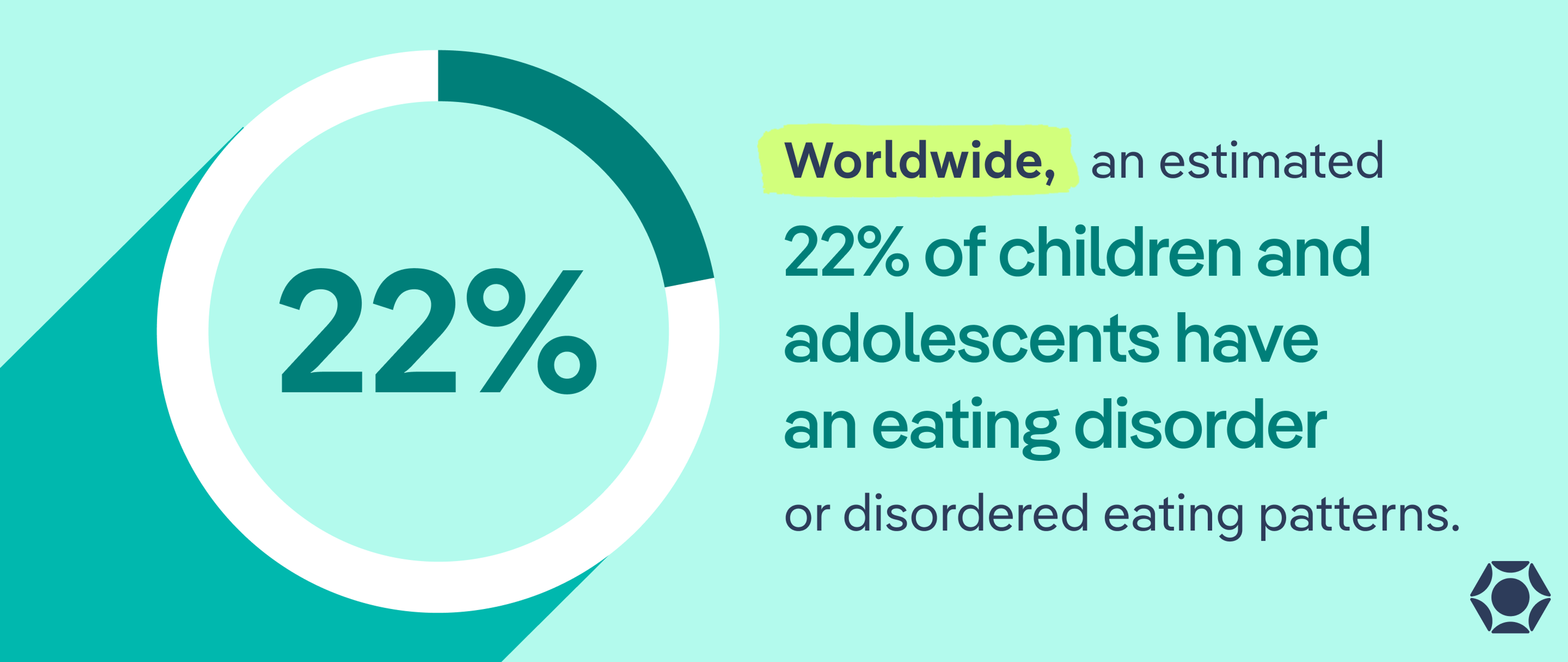
While people often associate eating disorders with teens and young adults, eating disorders in young children are more common than you might think; an estimated 22% of children and adolescents worldwide have an eating disorder or disordered eating patterns.
Since 2020, eating disorders have been increasing in young people, starting at 6 years old. Research also suggests that eating disorders are starting earlier in life.
Eating disorders that young children may have include the eating disorders:
- Avoidant/restrictive food intake disorder (ARFID): Avoiding food because of low appetite or disinterest, sensory sensitivities, or fear that something bad might happen while eating. Up to 22% of children will develop ARFID.
- Anorexia: Restricting food intake alongside a fear of gaining weight. An estimated 0.6% of children will develop anorexia.
- Bulimia: Binge eating followed by purging behaviors to compensate, such as vomiting or excessive exercise. An estimated 0.1% of children have bulimia.
- Binge eating disorder: Repeated episodes of binge eating while feeling a loss of control and shame or guilt about the behavior. An estimated 1% of children worldwide develop binge eating disorder.
- Other specified feeding and eating disorder (OSFED): OSFED is an umbrella term for eating disorders that don’t fully meet the diagnostic criteria of other specific eating disorders, and it includes diagnoses such as atypical anorexia and purging disorder.
Eating disorders in children vs. teens
Eating disorders in children will often look different compared to teens, which could contribute to the misconception that young kids don’t get eating disorders. For example, according to Carly Poynter, PsyD, post-doctoral fellow at Eating Disorder Therapy LA, “younger children may present with more behavioral changes. “Behaviors are often less secretive when compared to teens or young adults with eating disorders.”
You’re also more likely to notice early physical changes in younger children with eating disorders compared to teens. Your child may fall off their growth curve or they may show symptoms such as an abnormal heart rate, dizziness, or fatigue. Keep in mind that falling off the growth curve—even if your child isn’t underweight—is a major red flag.
How young can someone be diagnosed with an eating disorder?
Eating disorders can be diagnosed at any age. The most common eating disorder in children and often the earliest diagnosed is ARFID. According to Jonathan Levine, LCSW, therapy lead for Equip, children as young as 3 years old may show symptoms of ARFID, though it’s commonly diagnosed closer to 5 years old.
Keep in mind that ARFID in children is different from pediatric feeding disorder. Pediatric feeding disorder occurs when a child lacks the developmental skills to properly feed themselves. ARFID, on the other hand, is an eating disorder that occurs when a child chooses to restrict certain foods due to disinterest in food, lack of hunger, sensory sensitivities, or fear of eating.
Anorexia can also be diagnosed under the age of 10 years old. Bulimia and binge eating disorder may occur in younger children, though they’re more commonly diagnosed in older children, according to Levine.
Kids may not fit neatly into one of these eating disorder categories, but they can still be diagnosed with OSFED—another serious eating disorder that requires treatment.
What are warning signs of eating disorders in children?
While you should keep an eye out for sudden shifts in a child’s behaviors, keep in mind that EDs can show up in many different ways. You may notice drastic changes, but that’s not always the case.
“You really want to be monitoring for any type of drastic shifts in diet, as well as in a hyperfocus on ’healthy’ stuff,” Levine says. “A lot of that can be developmentally appropriate, especially in the culture we live in, but a rapid shift in hyperfocus is a really clear warning sign that something may be brewing.”
If your child has an eating disorder, it can show up in a number of different ways, including behavioral, physical, cognitive, and emotional symptoms. While some of these symptoms are similar to older teens, keep in mind eating disorders look different in children. You’re more likely to notice behavior and physical changes, even though some of them can be subtle, because kids are less likely to hide these signs.
Behavioral signs
Behavioral signs are some of the most common indications of eating disorders in kids, according to Poynter. These can include:
- Refusal of foods that they previously enjoyed
- Refusal of food all together
- Hiding food
- Social withdrawal
- Avoiding meals and snacks with other people
- New eating behaviors, such as a new diet or a fixation on healthy eating
- Eating significantly different portion sizes
- Eating more slowly
- Cutting food into small pieces
- Obsessive exercise
- Interest in comparing bodies
- Describing parts of their body in a more negative way
- Hyperfocus on having muscles, especially in boys
- Spending more time looking in mirrors
- Placing a high value on weight, weight loss, and body shape or size
Physical signs
You or your pediatrician may notice the physical signs of an eating disorder first. Common physical signs of eating disorders in kids include:
- Weight or height falling off of their growth curve
- Weight loss
- Decreased muscle mass
- Low heart rate
- Low blood pressure
- Dizziness
- Fatigue
- Digestive issues
- Complaints about stomach aches
- Delayed puberty or early puberty
- Being cold all the time
- Dry skin
- Thin hair
- Lanugo (fine hair on the body)
- Cuts or callouses on knuckles from vomiting (Russell’s sign)
- Poor immune function (getting colds frequently)
- Electrolyte imbalances
Emotional and cognitive signs
Emotional symptoms of a child not eating enough or having an eating disorder can include:
- Irritability due to lack of food consumption
- Anxiety or emotional dysregulation around meal times
- More emotional dysregulation in general
- Mood changes that may include anxiety, depression, or even euphoria
- Shorter attention span
- Flat affect (lack of emotion)
- Tantrums
- Trouble at school due to difficulties concentrating from lack of food intake
If you’re unsure about any of your child’s symptoms, take Equip’s free eating disorder screener. It can help you understand if your child is at risk for an eating disorder.
Which types of eating disorders are most common in children?
The most common eating disorders in children are ARFID and anorexia, though kids can also be affected by binge eating disorder, bulimia, or OSFED. Let’s take a closer look at each of these.
ARFID
ARFID is the most common eating disorder in children. ARFID involves limiting food intake because of sensory sensitivities, low interest in food, lack of appetite, or fear of bad things happening while eating. These behaviors aren’t driven by body image issues or fear of weight gain, though children with ARFID may have body image concerns like any other child.
Children with ARFID may dislike certain textures, smells, tastes, or colors of foods, or simply have little to no interest in eating. They may also be afraid of food because they believe it could cause pain, choking, or vomiting. These fears can be triggered by a traumatic event, such as feeding problems as an infant, having choked in the past, or getting sick from food due to food poisoning, food allergies, or something else.
Anorexia
Anorexia is an eating disorder that involves restricting food intake along with an intense fear of gaining weight. Levine says he more commonly sees anorexia and food restriction in young children compared to binge eating.
Keep in mind with anorexia in children, the fear of gaining weight and body image issues may show up more subtly. “Children may or may not verbalize negative body image/body dissatisfaction,” Poynter says. “However, some may demonstrate a greater interest in comparing bodies or describe some parts of their body in a more negative way.”
Binge eating disorder
Some young children will develop binge eating disorder, where they consume large amounts of food in a short period of time. They may feel out of control while bingeing and experience guilt and shame afterward.
Binge eating disorder can be an easy eating disorder to miss, according to Levine, since eating lots of food can be a normal part of development for growing children.
Bulimia
Bulimia is the least common type of eating disorder for this age group, though it can occur. This eating disorder involves binge eating followed by purging behaviors, such as vomiting, laxative use, or excessive exercise, to “make up for” the food eaten.
OSFED
Some children may have an eating disorder that doesn’t fit into the other categories. In that case, they may be diagnosed with OSFED, which can affect children of any age. Atypical anorexia—where a child is a normal weight but still restricting their food—falls under OSFED.
Why are eating disorders in children often missed?
There are a number of reasons eating disorders in children are often missed, so if you’re blaming yourself for missing a potential eating disorder in your child, “try to relinquish any guilt and shame,” Levine says.
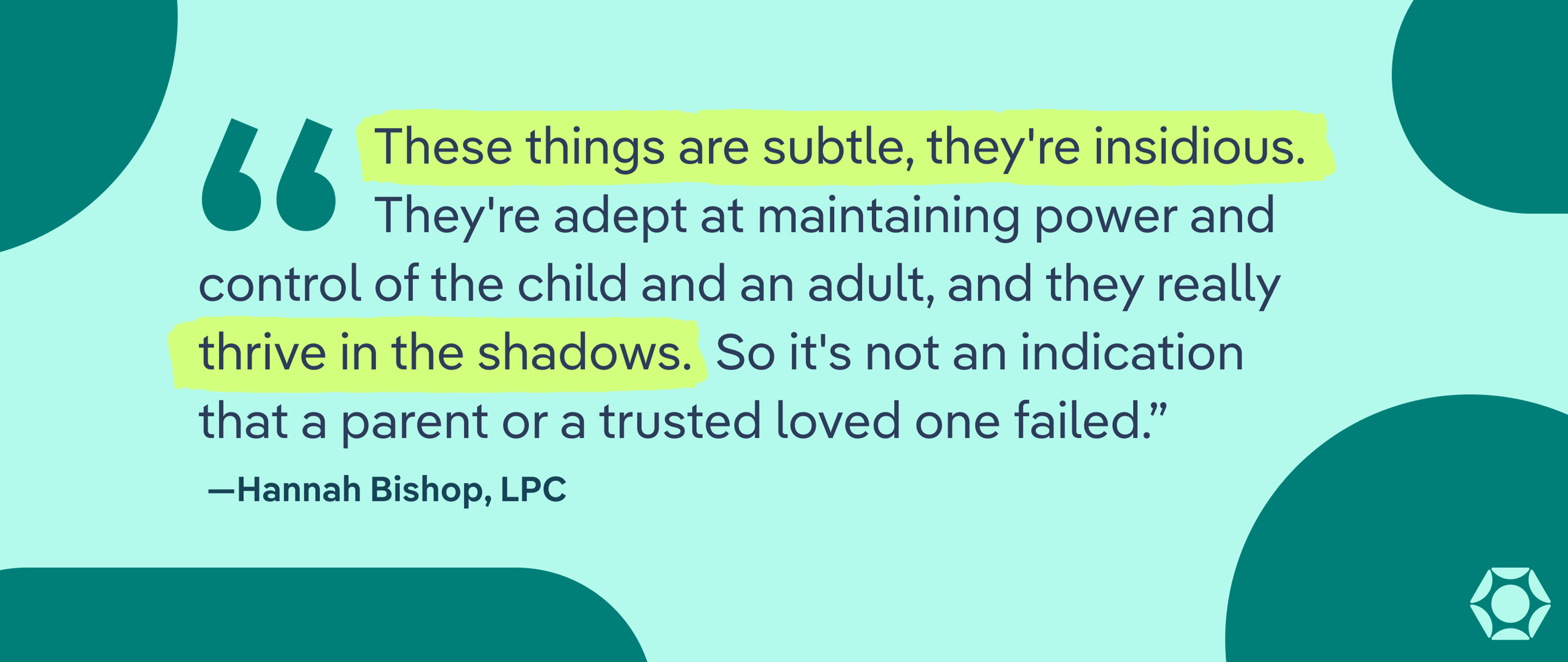
“Most parents I meet with are often like, how could I miss this? How did I not know this was happening?” Levine adds. “These things are subtle, they're insidious. They're adept at maintaining power and control of the child and an adult, and they really thrive in the shadows. So it's not an indication that a parent or a trusted loved one failed.”
Below are some of the most common reasons eating disorders in children are missed.
Signs can be subtle
“Some parents have said that they have not noticed the more subtle changes or have thought that these changes were related to their rapid development,” Poynter says.
For example, children with eating disorders may complain about stomachaches or have a lack of interest in eating. They may also be cranky or have tantrums because they’re not eating enough.
Weight changes can look different
In children, you might not always notice rapid weight loss. Eating disorders might instead cause your child to fall off their growth curve for height and weight gain. In the case of young children, not gaining weight can be a subtle but early sign of an eating disorder. In fact, it’s the number one warning sign of an eating disorder to look for in children.
“Some pediatricians also do not monitor a growth curve as closely and do not point out when a child has dropped off their growth curve, especially when the child’s growth curve is above the 50th percentile,” Poynter adds.
Body image issues look different
Young children with eating disorders may not show as many direct signs of body image issues and a fear of weight gain compared to older children. They may, however, compare bodies or have negative things to say about certain parts of their body, such as their hips or chin, Levine says.
Weight stigma
For children in larger bodies, weight stigma can lead to an eating disorder being missed—in fact, these children may be praised for losing weight. Or, they may fall off their individual growth curve, and pediatricians may not flag it as a potential issue to investigate.
Similarly, pediatricians may rely too much on the BMI to measure a child’s weight. “BMI is a faulty metric,” Levine says. “It's an oversimplification of looking at a complexity.”
Diet culture
When a child suddenly starts focusing on their health and “healthy” foods, it can be a sign of an eating disorder. But this can be missed because diet culture tells us that focusing on healthy foods is a good thing. “Adults suffer from the same diet culture as kids do,” Levine says.
“It’s just picky eating”
“ARFID is frequently played off as ‘picky eating’ and often left undiagnosed and untreated until the child begins to experience significant impairment in development,” Poynter says.
ARFID is different from picky eating. Picky eaters will still be hungry and want food, but children with ARFID may avoid food altogether. If you’re not sure about your child’s behaviors, take Equip’s screener that can help you tell the difference between ARIFD and picky eating.
“It’s just a phase”
In developing children, eating disorders can sometimes be missed because the symptoms are labeled as “just a phase.” It can be normal developmentally for kids to have body image concerns or go through periods of eating more or less. But eating disorders are not a phase and will get worse over time.
What are the health risks associated with eating disorders in children?
Eating disorders can cause serious health risks for children, but treating them as early as possible can help prevent many of these issues from taking hold. “Luckily kids are resilient, so if you catch it quick enough, you can shift those [health risks],” Levine says.
Here are some of the most common health risks of eating disorders in kids.
- Falling off their growth chart: “When children are malnourished, their height can be stunted,” Poynter says.
- Low bone density: Eating disorders put children at risk of not reaching their peak bone density, which can lead to stress fractures and osteoporosis when they’re older.
- Digestive issues: Children with eating disorders may complain of stomach aches, and they can experience other digestive issues such as constipation.
- Heart problems: Restricting food can cause cardiovascular issues like low heart rate, abnormal heart rhythms, and low blood pressure.
- Mood issues: Kids who aren’t eating enough can become malnourished, which can lead to irritability, mood issues like depression, or tantrums.
- Mental health risks: Children with eating disorders have a higher risk for mental health conditions such as depression, anxiety, and suicidal thoughts.
- Delayed puberty: Eating disorders can lead to delayed puberty in children.
What causes eating disorders in children?
As with eating disorders at any age, eating disorders in children aren't caused by one single thing. “All mental health diagnoses, eating disorders included, are a biopsychosocial phenomenon,” Levine says. This means they’re caused by a number of interconnected factors.
Factors that contribute to eating disorders in kids include:
Genetics
Eating disorders have a genetic component, meaning a family history can increase a child’s risk of also developing one. And even if there's not a known family history of an eating disorder, there may still be genetic factors that predispose someone to one.
Traumatic experiences
Experiencing trauma, especially in childhood, can be a trigger for an eating disorder. Traumatic events include things such as physical or sexual abuse, a major loss, parental divorce, or being in an accident.
Other mental health conditions
Children with anxiety may be at higher risk of developing an eating disorder. ARFID also overlaps with neurodivergent conditions. So children with ADHD or autism may be more likely to develop ARFID.
Personality characteristics
Some personality characteristics may put a child at higher risk of developing an eating disorder. These traits include:
- Perfectionism
- Impulsivity
- Seeking to avoid stress or discomfort
- Compulsive behaviors
Social media and media
Even for young children, what they hear or see on social media or in the media can influence eating disorders. “With social media and media in general, there's just a really big push for thinness right now that feels quite dangerous,” Levine says.
Seeing extremely thin people and diet culture celebrated in the media can steer children towards disordered eating habits. “They don't have the capacity to realize that that person looks sickly, and they think that's what a ‘normal’ body should look like when it's not,” Levine says.
Parents aren’t to blame
Keep in mind that caregivers are not to blame for a child’s eating disorder. “If your child develops an eating disorder, it doesn't mean you've failed,” Levine says. “There's nothing wrong with you as a parent or a family.”
What are the treatment options for children with eating disorders?
Treatment for an eating disorder in a young child should involve the whole family. This might feel overwhelming, but the good news is, this approach is highly successful for young kids.
“Younger children are more amenable to behavioral interventions, and when we can apply these strategies early, we can prevent the eating disorder from becoming more insidious,” Poynter says.
The best approach for most eating disorders in children is a treatment called family-based treatment (FBT).
The role of family-based treatment (FBT)
FBT “is the gold standard for recovery in eating disorders,” Levine says. It’s an evidenced-based treatment that puts parents and caregivers in the driver’s seat of the recovery process, with the support and guidance of eating disorder professionals. It occurs in three phases.
During the first phase of treatment, “the parent is in charge of all things food, exercise, and supervision,” Poynter says. “This phase asks a lot of parents as they are to provide all meals and snacks and supervise them.”
While this may sound intimidating, it’s done with the support of an expert treatment team—which usually includes a therapist, dietitian, and medical provider–who will support your entire family through the process. Since FBT happens at home, it works well with virtual programs like Equip, allowing you the flexibility and convenience while still getting the support you and your child need.
As your child’s weight gets restored if needed and eating disorder behaviors lessen, FBT begins to return the responsibility of eating to your child at a developmentally appropriate level during phases two and three of FBT. “This is done in a gradual process to ensure the eating disorder does not creep back up,” Poynter says.
For children with ARFID, there’s a specific version of FBT designed to address the unique nuances of ARFID.
FBT can also include other evidence-based therapies like cognitive behavior therapy (CBT) and exposure and response prevention (ERP) to support your child’s recovery.
Levels of care and medical support
You may be concerned that your child may need hospitalization for an eating disorder, but keep in mind that not all children with an eating disorder need to be hospitalized—if they are medically stable enough to start outpatient treatment instead. Outpatient care should be the first-line treatment in most cases, since it lets the child stay at home and integrates well with FBT. That said, some children may need immediate medical intervention and will therefore start their treatment journey at the hospital.
Signs a child may need hospitalization, according to Levine and Poynter, include:
- Acute food refusals, that's going 24 hours without eating
- Significantly low weight or rapid weight loss
- Significantly low caloric intake
- Low blood pressure
- Low heart rate
- Electrolyte imbalances
- Fainting or significant dizziness
Hospitalization, however, is only for short-term care. After that, it’s best to transition to a lower level of care that supports lasting recovery. If your child has been hospitalized, they will step down to an outpatient treatment program. This can be an in-person treatment program or a virtual treatment program such as Equip.
What to do if you’re worried about a child
If you’re worried about your child or a child you love, there are steps you can take right away.
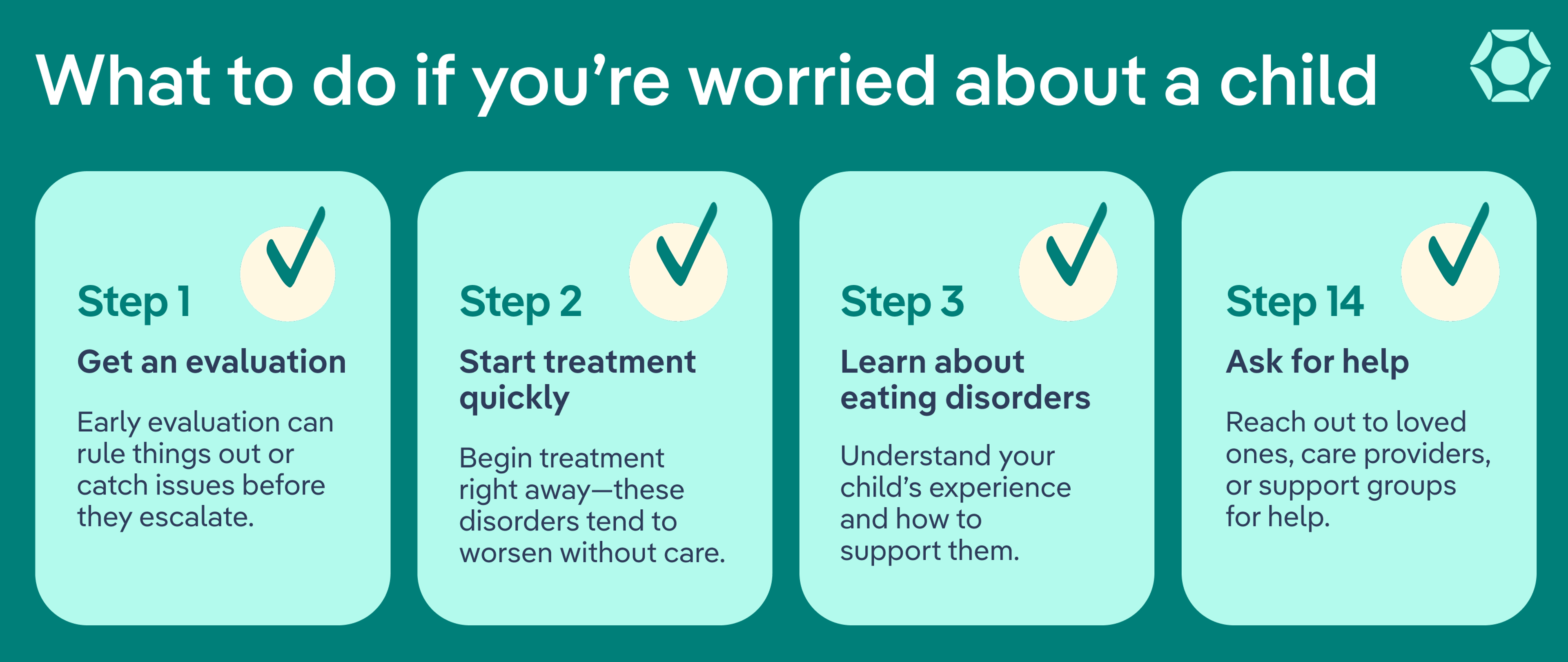
1. Get an evaluation
“Have your pediatrician complete a medical evaluation,” Poynter says. You can also reach out to a trained therapist for an eating disorder evaluation. You can easily and quickly schedule a call with Equip to get answers to your questions and start the treatment process.
Even if you’re not sure but you suspect something could be going on, get your child seen as soon as possible.
“If you're curious, if you're concerned, if you're uncertain, go to a trusted professional and get a screening just to make sure there's not something amiss,” Levine says.
2. Get into treatment as soon as possible
If your child does have an eating disorder, get them into treatment as soon as possible. This will help prevent their disorder from getting worse and get them on the road to recovery faster.
“If there is something amiss, get them in treatment immediately, because we know that there really isn't stagnation with eating disorders. There is progress and recovery or there's regression where it gets worse,” Levine says.
3. Learn about eating disorders
“Educate yourself about eating disorders and identify how to help,” Poynter says. This can help you feel more empowered on the journey to get your child well.
4. Ask for help
“There's no shame asking for help,” Levine says. You don’t have to take this journey alone, so reach out to loved ones, your child’s treatment team, or an eating disorder support group for help along the way.
The bottom line
Eating disorders can develop in children as young as 3 to 5 years old and are more common than many families expect. In young children, these disorders often look different than they do in teens, with symptoms showing up as behavioral changes, growth concerns, or physical and emotional shifts rather than obvious body image distress. Because signs can be subtle, eating disorders in children are frequently missed or mistaken for picky eating, phases, or healthy habits. Early identification and treatment are essential, as eating disorders can affect growth, physical health, and emotional well-being. The good news is that children are highly resilient, and with early intervention and family-based treatment, recovery is possible.
Frequently asked questions (FAQs)
What are the most common eating disorders in children?
The most common eating disorder in children is ARFID, with 5% to up to 22% of children having the disorder. Children can also develop anorexia, binge eating disorder, and less commonly, bulimia.
Will my child “grow out” of an eating disorder?
Children don’t “grow out” of eating disorders. Without treatment, eating disorders get worse and can lead to dangerous health outcomes like a lack of growth, low bone density, heart issues, digestive problems, and other mental health issues. Early intervention and treatment are the best course of action for young children with eating disorders.
What age can eating disorders start?
Eating disorders can start at any age. ARFID can start as young as 3 to 5 years old while other eating disorders like anorexia often occur a little older, as young as 9 or 10.
Barakat, Sarah, et al. “Risk factors for eating disorders: Findings from a rapid review.” Journal of Eating Disorders, vol. 11, no. 1, 17 Jan. 2023, https://doi.org/10.1186/s40337-022-00717-4.
DeBoer, Lindsey B., and Jasper A. Smits. “Anxiety and disordered eating.” Cognitive Therapy and Research, vol. 37, no. 5, 4 July 2013, pp. 887–889, https://doi.org/10.1007/s10608-013-9565-9.
Downey, Amanda E., et al. “Linear growth in young people with restrictive eating disorders: ‘inching’ toward consensus.” Frontiers in Psychiatry, vol. 14, 3 Mar. 2023, https://doi.org/10.3389/fpsyt.2023.1094222.
Farstad, Sarah M., et al. “Eating disorders and personality, 2004–2016: A systematic review and meta-analysis.” Clinical Psychology Review, vol. 46, June 2016, pp. 91–105, https://doi.org/10.1016/j.cpr.2016.04.005.
Gibson, Dennis, and Philip S Mehler. “Anorexia nervosa and the immune system—a narrative review.” Journal of Clinical Medicine, vol. 8, no. 11, 8 Nov. 2019, p. 1915, https://doi.org/10.3390/jcm8111915.
Hornberger, Laurie L., et al. “Identification and management of eating disorders in children and adolescents.” Pediatrics, vol. 147, no. 1, 1 Jan. 2021, https://doi.org/10.1542/peds.2020-040279.
López-Gil, José Francisco, et al. “Global proportion of disordered eating in children and adolescents.” JAMA Pediatrics, vol. 177, no. 4, 1 Apr. 2023, p. 363, https://doi.org/10.1001/jamapediatrics.2022.5848.
National Eating Disorders Association. “Eating Disorders and Trauma.” National Eating Disorders Association, 23 Sept. 2025, www.nationaleatingdisorders.org/eating-disorders-and-trauma/.
New York State Department of Health. “Eating Disorders and Your Bones: Get the Facts.” New York State Department of Health, www.health.ny.gov/publications/2049/index.htm. Accessed 30 Nov. 2025.
Pastore, Maria, et al. “Alarming increase of eating disorders in children and adolescents.” The Journal of Pediatrics, vol. 263, Dec. 2023, p. 113733, https://doi.org/10.1016/j.jpeds.2023.113733.
Patel, Riti, et al. “Cardiovascular impact of eating disorders in adults: A single center experience and literature review.” Heart Views, vol. 16, no. 3, 2015, p. 88, https://doi.org/10.4103/1995-705x.164463.
Petkova, Hristina, et al. “Incidence of anorexia nervosa in young people in the UK and Ireland: A national surveillance study.” BMJ Open, vol. 9, no. 10, Oct. 2019, https://doi.org/10.1136/bmjopen-2018-027339.
Ramirez, Zerimar, and Sasidhar Gunturu. “Avoidant Restrictive Food Intake Disorder.” StatPearls, StatPearls Publishing, 2025. PubMed, http://www.ncbi.nlm.nih.gov/books/NBK603710/.
Salari, Nader, et al. “Global prevalence of eating disorders in children: A comprehensive systematic review and meta-analysis.” Italian Journal of Pediatrics, vol. 51, no. 1, 7 Apr. 2025, https://doi.org/10.1186/s13052-025-01958-0.
Sanchez‐Cerezo, Javier, et al. “What do we know about the epidemiology of avoidant/restrictive food intake disorder in children and adolescents? A systematic review of the literature.” European Eating Disorders Review, vol. 31, no. 2, 16 Dec. 2022, pp. 226–246, https://doi.org/10.1002/erv.2964.
Smith, April R, et al. “Eating disorders and suicidality: What we know, what we don’t know, and suggestions for future research.” Current Opinion in Psychology, vol. 22, Aug. 2018, pp. 63–67, https://doi.org/10.1016/j.copsyc.2017.08.023.