Signs of Anorexia: How to Spot Changes in Yourself or Someone You Love


- Anorexia nervosa is a serious eating disorder defined by extreme restriction of food intake, which often (but not always) leads to a significantly low body weight.
- There are many physical, behavioral, emotional and social signs of anorexia nervosa, including substantial or rapid weight loss, compulsive exercise, anxiety, irritability, and social isolation.
- Anorexia nervosa treatment requires a multidisciplinary approach involving psychotherapy, medical care and monitoring, and nutritional counseling.
- Equip offers virtual anorexia nervosa treatment in all 50 states that uses evidence-based approaches, like family-based treatment (FBT) and enhanced cognitive behavioral therapy (CBT-E).

When people start skipping meals and limiting food groups out of fear of gaining weight, it’s rarely a good sign. And for some, like one teenager named Emily, these behaviors were the first signs that she was developing an eating disorder. Emily’s mom Kristen began noticing that her daughter, who was a dancer, was becoming smaller and smaller in her leotard. Soon, she saw that Emily was barely packing any food in her school lunch box each day—and the food she did bring to school would often return home at day's end, largely uneaten.
"Over the span of time, I noticed she was restricting what she was eating and the amounts [of food]," says Kristen, who later learned from a dietitian that her daughter had an eating disorder. That disorder turned out to be anorexia nervosa, a condition that can be life threatening if left untreated.
Anorexia nervosa is a complex eating disorder that involves restricting food and intense fear of gaining weight, to name a few of the signs and symptoms. There are many others, as well, linked to exercise habits, food behaviors, body image, socializing and more.
In this article, we'll take a closer look at what anorexia nervosa involves as well as the warning signs of anorexia nervosa, so you can know what to watch for in a loved one (or yourself) as well as how and when to seek help.
What is anorexia nervosa?
Anorexia nervosa, often just called anorexia in non-medical terms, is a serious eating disorder and mental health condition in which a person restricts the amount of food they eat because of an overwhelming fear of gaining weight and a distorted perception of their body.
"It’s not about vanity; it’s a complex illness that can become a person’s way of coping with difficult emotions, trauma, or a sense of life feeling out of control," says eating disorder and body image expert Cherie Miller, LPC-S, CEDS-C, IEDS, clinical director and CEO of the Nourished Soul Center for Healing.
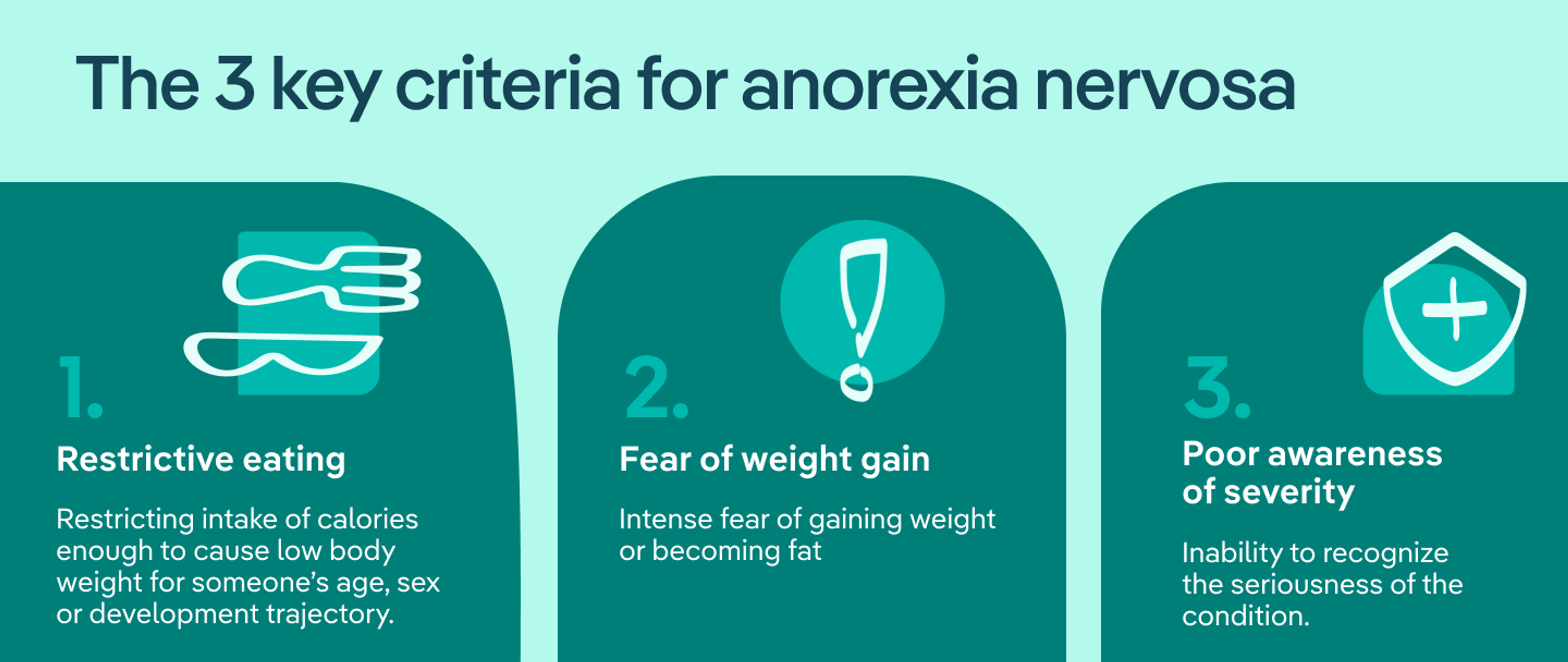
According to the Diagnostic and Statistical Manual of Mental Disorders (DSM-5) there are three key criteria for anorexia nervosa:
- Restricting intake of calories enough to cause low body weight for someone’s age, sex or development trajectory
- Intense fear of gaining weight or becoming fat
- Inability to recognize the seriousness of the condition
In addition, there are two different subtypes of anorexia nervosa. The two types are anorexia nervosa restricting type (AN-R) and anorexia nervosa binge/purge type (AN-BP). Both of these types of anorexia nervosa involve engaging in severe food restriction, along with significantly low body weight and the fear of weight gain. Anorexia nervosa binge-purge type, however, also includes episodes of purging food and sometimes binging on food.
Atypical anorexia, on the other hand, is categorized as an “other specified feeding and eating disorder” (OSFED), a diagnostic category for all eating disorders that don’t fit neatly into the other diagnostic criteria. People who have atypical anorexia nervosa have significant weight loss from restriction of food or purging behaviors and are at risk of all the same medical complications as those with anorexia nervosa, says Barbara Kessel, DO, a psychiatrist at Equip.
"Atypical anorexia is really not atypical at all," adds Kessel. "Atypical AN is actually more common than AN-R or AN-BP and has all other diagnostic criteria for typical anorexia nervosa with the exception of low body weight."
Underscoring Kessel's point, a meta analysis published in 2021 in the International Journal of Eating Disorders found that atypical anorexia nervosa actually occurs more than anorexia nervosa, but fewer people with this particular condition are referred to or admitted to a facility to receive the care needed for an eating disorder.
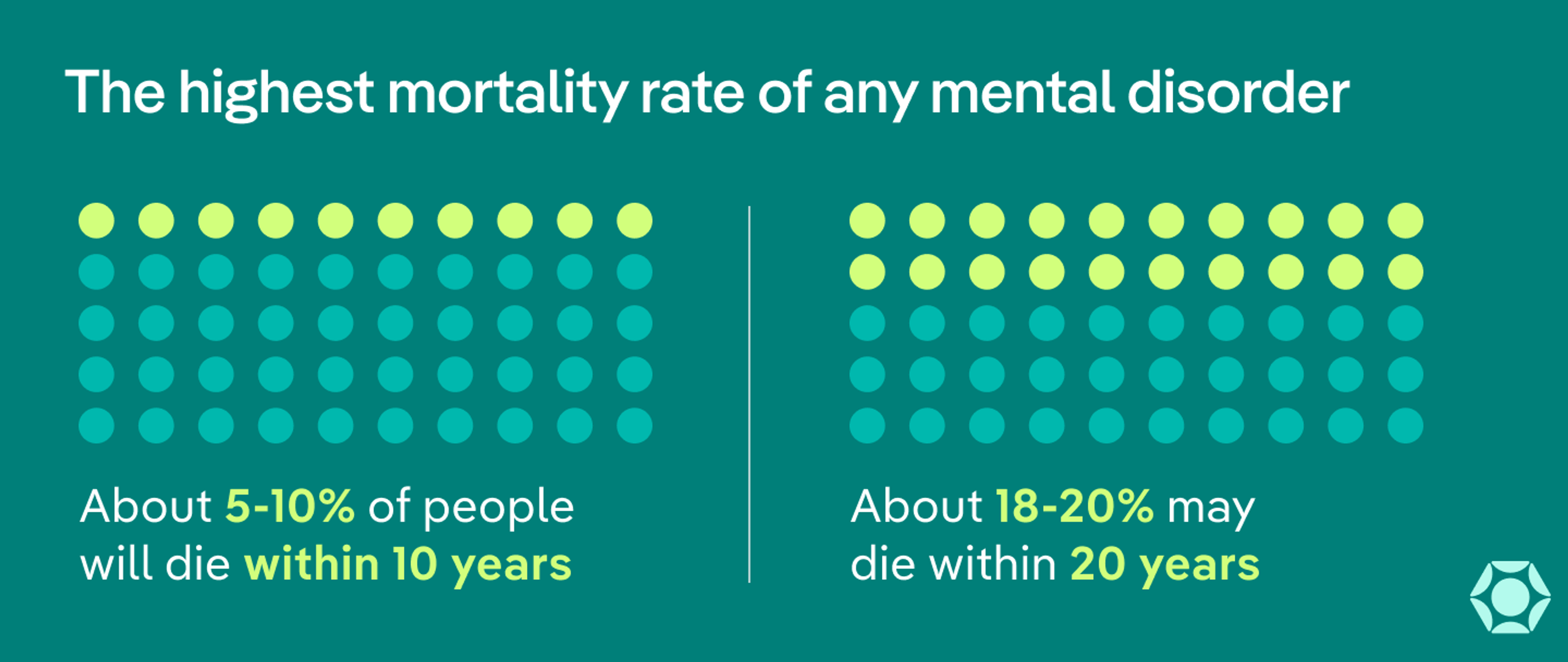
Anorexia nervosa has a lifetime prevalence of up to 4 percent of females and 0.3 percent of males, according to data published in 2024 by the National Alliance for Eating Disorders. In addition, anorexia nervosa has the second highest mortality rate of any mental disorder, after opioid use disorder. About 5-10 percent of people with AN will die within 10 years, and 18-20 percent may die within 20 years.
But those statistics are far from the full story: It’s crucial to know that anorexia nervosa is a treatable condition. There are so many effective approaches available to help those who are struggling regain a healthy weight and establish healthy eating habits.
What are signs of anorexia nervosa?
There are many signs of anorexia nervosa, ranging from physical to behavioral, emotional, and social. While some of the signs of anorexia nervosa are observable, just as many aren't. Often, the symptoms may be internal or may even be subjective. In still other cases, signs of anorexia nervosa may be something a person does in secret.
"Eating disorders can be tricky to spot in a loved one because so many signs and
symptoms are culturally sanctioned or even praised as 'disciplined.'" says Kessel.
In addition, many of the signs of anorexia nervosa may appear together or impact each other. "Anorexia nervosa affects people emotionally, physically, socially, and behaviorally, and those four areas constantly influence one another," says Miller. "Emotional distress often shows up first, feelings like anxiety, fear of weight gain, perfectionism, or pressure to be in control. Those emotions then lead to changes in behavior, such as skipping meals, cutting out foods, being rigid about ingredients, or needing to know every calorie."
Once the body becomes undernourished, physical symptoms begin appearing, and those physical effects, such as brain fog, irritability, and slowed thinking, can make the emotional distress worse, adds Miller.
Here's a closer look at the various signs and symptoms of anorexia nervosa.
Physical signs of anorexia nervosa
There are a variety of physical signs of an eating disorder like anorexia nervosa. Some are outwardly obvious examples(think: weight loss or thinning hair) while others are less immediately apparent, such as reduced bone mass. All of the physical symptoms are tied to the same issue.
"The physical and emotional changes involved in AN are a direct result of malnutrition," explains Kessel. "As the body becomes malnourished, there is fat and muscle loss throughout the body. This includes important fats that help our brains and neurons function (myelin) and muscles that make up our heart and gastrointestinal systems. Having an eating disorder takes an enormous emotional and physical toll on individuals."
The following are some of the potential physical signs of anorexia nervosa:
- Rapid and/or substantial weight loss
- Lethargy or extreme fatigue
- Feeling weak
- Lightheadedness
- Fainting
- Irregular heart rhythm
- Constipation
- Stomach or abdominal pain
- Regularly feeling cold
- Thinning hair
- Fine, downy body hair known as lanugo
- Dry, yellow-colored skin
- Brittle nails
- Irregular menstruation or no periods
- Swelling of arms of legs
- Reduced bone mass
Behavioral signs of anorexia nervosa
Behavioral signs that someone has anorexia nervosa can often start subtly, but over time, they may escalate and become more obvious. Moreover, many of the behaviors associated with this illness may be practiced when others are not watching, such as secretive eating. In addition, the impacted individual may lie about their actions. For instance, they may say they've eaten, when in reality they have not had any food.
The following are some of the potential behavioral signs of anorexia nervosa:
- Excessive exercise
- Dieting
- Obsession with appearance
- Fear of gaining weight
- Food rituals such as cutting food into small pieces or using excessive spices
- Focus on making own food
- Eliminating entire categories of food
- Counting calories
- Use of laxatives or appetite suppressants
- Hiding food
- Going to the bathroom after eating to purge
- Trouble sleeping
Emotional signs of anorexia nervosa
Anorexia nervosa can also take a significant emotional toll, even impacting relationships, work performance and many other areas of our daily life. Here too, there are signs to be alert for, or emotional indicators that a person may be struggling with an eating disorder. Mood swings, depression or increased anxiety are additional red flags or signs of the disorder.
"For example, skipping a workout leads to significant distress. Or individuals are exercising in spite of injury or illness, or they're having anxiety about food," says Kessel.
"People with anorexia nervosa will become increasingly anxious, obsessive, and emotionally blunted or depressed as they fall deeper into their illness," adds Kessel. People with anorexia nervosa may also struggle with suicidal ideation or self-harm behavior. Importantly however, none of these emotions are personality flaws, but are symptoms of an illness that requires treatment and care.
The following are some of the potential emotional signs of anorexia nervosa:
- Increased anxiety
- Feeling angry or irritable
- Obsessive thinking
- Loss of interest in sex
- Mood changes
- Depression
- Perfectionism
- Difficulty expressing emotions
- Focus on appearance
- Lack of emotion
Social signs of anorexia nervosa
Anorexia nervosa not only affects a person's relationship with food, but many other areas of life as well, including their social life and behavior around others. Often, this involves distancing from others.
"So much of what we experience in life focuses around food, so changes in a relationship with food with in itself lead to isolation and removal from social experiences," says Kelsey Latimer, PhD, CEDS-S, APRN, PMHNP-BC, a psychologist, psychiatric nurse practitioner and CEO KML Psych Services. "In addition to that, we need to realize that there is often depression, anxiety and trauma that accompanies this disorder and those things in themselves also change the way someone moves through the world."
Indeed, anorexia nervosa may limit where someone is willing to go, what they're willing to do and even how they interact with others. This is often because anorexia nervosa impacts a person's sense of physical well-being and also their self-worth.
"They may stop going out, lose interest in hobbies, or seem distracted and disconnected," explains Miller. In addition, she says "relationships become strained because the eating disorder starts making decisions for the person."
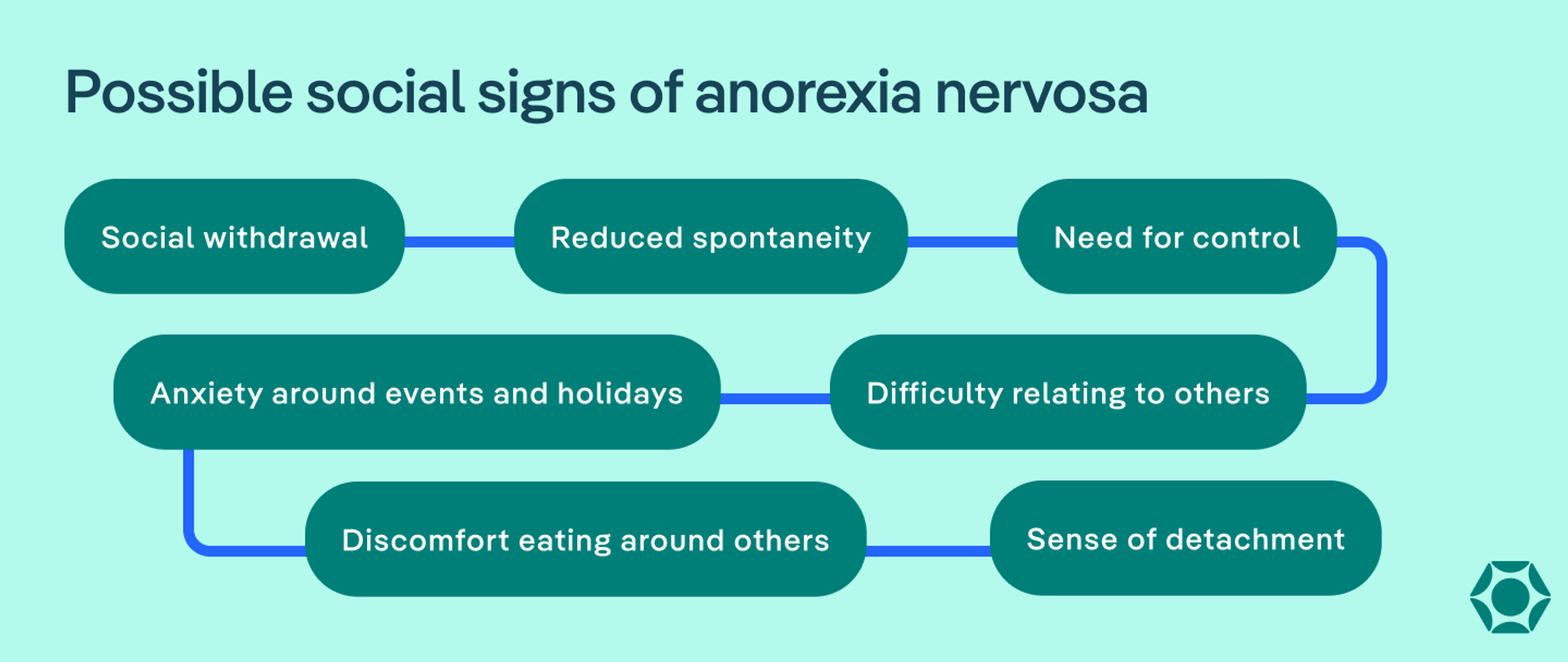
Some of the potential social signs of anorexia nervosa include:
- Withdrawal from social activities
- Concerns about eating in public or around others
- Lack of spontaneity
- Focus on controlling their environment
- Anxiety about participating in holidays or other events
- Finding it hard to relate to others
- Feeling detached
If you're wondering if any of these signs of anorexia are preventable, this article is a great place to learn more about what is and isn't controllable.
When and how to seek help
If you or someone you love may be impacted by an eating disorder, it’s crucial to get help as soon as possible. It is never too early to act. In fact, the research is clear that early treatment leads to better outcomes; eating disorders don't go away on their own, and often get worse over time.
"Research has shown that the sooner someone gets help, the more likely they will be to
make a full recovery from their eating disorder," says Kessel. "Waiting to seek help can lead to worsening of the illness, increasing need for hospitalizations or higher levels of care."
Equally importantly, there is no such thing as needing to be “sick enough” to get care. Treatment can help at any point in the disorder journey, no matter how long the illness has been present. "All people with an eating disorder deserve evidence based treatment, like that offered at Equip," says Kessel.
The first step is to reach out to a healthcare professional, whether the illness is impacting you or someone you love. You can talk through your concerns on a free, no commitment consultation with an eating disorder expert at Equip.
For yourself
If you're struggling with anorexia nervosa, it's not unusual to feel shame or fear about your illness and be embarrassed to seek help. But it's important to understand that obtaining treatment for anorexia nervosa is critical.
Waiting to get help can lead to a worsening of the eating disorder—and a potentially increased risk for inpatient care or hospitalization for medical stabilization.
For someone you love
If you're worried that someone you know or love may have anorexia nervosa, it's important to talk about those concerns with the individual. Discussing some of the objective behaviors you've observed can be an effective approach to initiate this type of conversation without making it seem like an attack.
"Being specific with things you are noticing that might be related to food and beyond takes away the personal attack and focuses on objective reality," says Latimer. "It is always best to come from a place of caring compassion instead of anger, shaming, or aggressive angles."
"These conversations are very difficult to maneuver at times and will often lead to a person denying the issues even with evidence presented," Latimer adds. "That's a part of the process and does not mean you've done something wrong or that the person isn't listening."
Some techniques to consider include:
- Name some objective behaviors and emotions you've noticed
- Let the person know you're concerned about them
- Avoid commenting on the person's weight or appearance
Some phrases to consider:
- "I've noticed you are avoiding eating around other people and have been acting more anxious around meal times."
- "I want to help support you.”
- “I care about you, and I’ve noticed some things that worry me."
- “I want to understand what you’re feeling.”
As difficult as it may be to initiate a conversation, helping someone suffering from anorexia nervosa is an important first step on the road to getting them treatment. It's also important to be prepared for pushback, defensiveness or denial. Often, a person with an eating disorder may not want help. The key is to avoid being discouraged by their response or give up. It may take more than one conversation to make progress.
And one more important point for parents: if your child is a minor, their signoff is not required to get them into treatment. Moreover, it's not only common, but expected that a young person with anorexia nervosa might be defensive or wholesale resist the idea of needing any sort of treatment at all. The critical takeaway is that it's important for you to seek help for your child anyway. The sooner someone begins treatment, the better the odds of a full recovery.
What to expect
If you or a loved one is ready to seek help from a healthcare professional, it's important to know what to expect. The evaluation process is not all that unlike visiting a primary care doctor for an annual checkup.
That means the healthcare professional will conduct a complete physical exam. But there will also likely be questions about mental health history, eating habits and exercise patterns.
Tests are also typically conducted and they could range from basic steps—like getting the patient's weight and blood pressure and heart rate in different positions—to more extensive options like ordering blood tests including electrolytes,thyroid, kidney and liver function tests,bone density tests, an electrocardiogram (EKG), and potentially a urinalysis.
The good news is there's a variety of treatments available and a practitioner may even discuss some of these during an initial exam. The conversation may cover some of the evidence-based treatments that are available for people of all ages with anorexia nervosa and atypical anorexia nervosa.
Some of the common treatments include family-based treatment (FBT) for children and adolescents and enhanced cognitive behavioral therapy (CBT-E) for adults are manualized treatments that are backed by scientific evidence. These therapies are often supported by a registered dietitian (RD).
Equip treats all types of eating disorders and patients of all ages, providing 100 percent virtual care with a multidisciplinary team. Our evidence-based treatment is accessible immediately, without a waitlist, covered by insurance, and has been proven to support lasting recovery.
Conclusion
Anorexia nervosa is a serious, sometimes life-threatening condition. There are many signs and symptoms, some of which are visible, while others happen in secret. Being aware of the signs, whether in yourself or someone else, is the first step to getting the necessary help. Most importantly, seeking assistance sooner rather than later is key, and recovery is always possible.
FAQ
What are the beginning stages of anorexia nervosa?
Initially, anorexia nervosa may include significant weight loss over the course of a few weeks or months, as well as an intense focus on certain types of food or quantities. The early phases may also include obsession with exercise and use of appetite suppressants. As anorexia nervosa worsens, it may also include abnormal heart rhythm, dizziness, fatigue and constantly feeling cold, among other symptoms.
What are signs of anorexia nervosa?
Some of the signs of anorexia nervosa include significant weight loss, fear of becoming fat, focus on food types and quantities, excessive exercising, use of appetite suppressants or laxatives and denial of hunger and abnormal eating behaviors. Thinning hair, brittle nails and lethargy are still more signs, as is social isolation.
How does anorexia nervosa affect the body?
Anorexia nervosa can have a variety of serious consequences for your body. That includes becoming malnourished, as well as impacting all of your body's organ systems. It can cause kidney problems, heart problems, low blood pressure, bone loss, and even death.
Does anorexia nervosa cause hair loss?
Yes, anorexia nervosa can cause hair loss. It is one of many common symptoms of the eating disorder, along with the development of what's known as lanugo, which is a type of soft, downy hair growth that appears on the sides of the face, the back, and arms and legs.
Moore, Christine A, and Brooke R Bokor. “Anorexia Nervosa.” National Library of Medicine, StatPearls Publishing, 2023, www.ncbi.nlm.nih.gov/books/NBK459148/.
National Institute of Mental Health. “Eating Disorders: What You Need to Know.” National Institute of Mental Health, 2024, www.nimh.nih.gov/health/publications/eating-disorders.
Harrop, Erin N., et al. “Restrictive Eating Disorders in Higher Weight Persons: A Systematic Review of Atypical Anorexia Nervosa Prevalence and Consecutive Admission Literature.” International Journal of Eating Disorders, vol. 54, no. 8, 17 Apr. 2021, pp. 1328–1357, https://doi.org/10.1002/eat.23519.
hello@kuma.agency. “Eating Disorder Statistics: An Updated View for 2024 - National Alliance for Eating Disorders.” National Alliance for Eating Disorders, 4 May 2024, www.allianceforeatingdisorders.com. Accessed 3 Dec. 2025.
ANAD. “Eating Disorder Statistics | ANAD - National Association of Anorexia Nervosa and Associated Disorders.” Anad.org, 29 Nov. 2023, anad.org/eating-disorder-statistic/.
Chandler. “How Anorexia Can Affect Social Life and Skills.” Eating Disorder Hope, 6 Apr. 2023, www.eatingdisorderhope.com/blog/how-anorexia-can-affect-social-life-and-skills.
Cleveland Clinic. “Eating Disorders: Anorexia.” Cleveland Clinic, Cleveland Clinic, 2024, my.clevelandclinic.org/health/diseases/9794-anorexia-nervosa.
Leonard, David, and Philip S. Mehler. “Medical Issues in the Patient with Anorexia Nervosa.” Eating Behaviors, vol. 2, no. 4, Dec. 2001, pp. 293–305, https://doi.org/10.1016/s1471-0153(01)00058-7.
Substance Abuse and Mental Health Services Administration. “Table 19, DSM-IV to DSM-5 Anorexia Nervosa Comparison.” National Library of Medicine, Substance Abuse and Mental Health Services Administration (US), 2016, www.ncbi.nlm.nih.gov/books/NBK519712/table/ch3.t15/.
“Anorexia Nervosa.” John Hopkins Medicine, 2019, www.hopkinsmedicine.org/health/conditions-and-diseases/eating-disorders/anorexia-nervosa.