What to Do After Binge Eating: 8 Recovery-Supporting Steps


- Binge eating is caused by a complex mix of biological and psychological factors—not a moral failure. A binge is typically the body’s natural response to food restriction or emotional overwhelm, rather than a lack of willpower or discipline.
- Attempting to "fix" a binge by skipping meals or over-exercising almost always backfires, triggering hunger hormones that continue to perpetuate the binge-restrict cycle.
- The most productive way to respond to a binge is with self-compassion, reaching out for connection, and continuing to eat regular, planned meals.
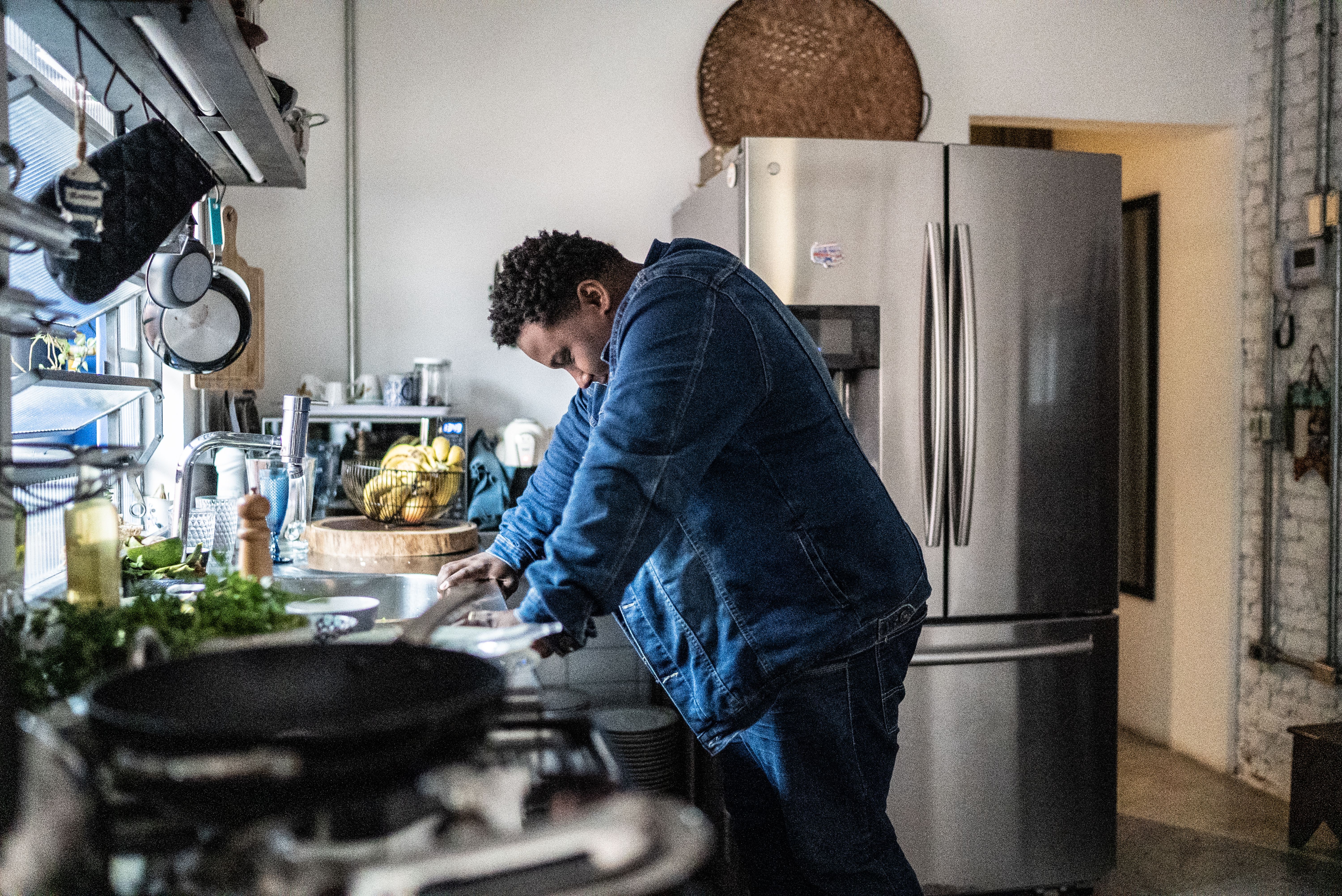
When Equip Lead Peer Mentor Makailah (Mak) Dowell was struggling with binge eating, she turned to food for the sense of comfort and safety it provided. But after each binge (which is defined as eating an objectively large amount of food at one time while feeling a lack of control), she felt intense fear and shame. Like many who have experienced binges, Dowell—who was diagnosed with binge eating disorder (BED) and bulimia—was left feeling the need to “compensate” for her behavior or “fix” the damage she had done.
“The ‘fixes’ had to be instant,” she says. “I figured I had to show myself that I could never, ever do it again,” she says. “It would be this constant cycle of ‘everything’s fine, binge, response, self-hatred, a lot of time passing, then everything’s fine again.’ Then the cycle repeated itself. It is exhausting, ruthless, and no one comes out unscathed.”
As Dowell and eating disorder experts can attest, attempting to “fix” a binge through compensatory behaviors (like purging, overexercise, or restriction, among others) will never actually “fix” the issue at all. In fact, engaging in these behaviors just compounds and perpetuates a harmful cycle. Read on to learn more about binge eating, why it happens, and what to do after binge eating that will actually help you.
What exactly is a binge?
A binge is defined as an episode in which someone eats a large amount of food in a short amount of time—past fullness and often to the point of physical discomfort—while feeling a lack of control over what or how much they’re eating. Some people experience this as feeling like a “food obsession.”
Licensed psychotherapist Tessa Gordon, MA, LMFT says the most important part of this definition is not the amount of food, but the felt experience of losing control. “While diagnostic language often refers to eating more than others might in a similar time frame, I’m very careful with this comparison in eating disorder work,” she says. “Meal plans in recovery can be intentionally larger, and many clients worry they are bingeing simply because they are eating more than parents, peers, or family members who may be influenced by diet culture or have very different eating patterns.”
Because of this, Gordon says it’s important to focus on internal experience rather than external comparisons, since ideas of “normal” portion sizes can be shaped by diet culture and other influences. Binges can look different from person to person, but they are commonly followed by intense feelings of guilt, shame, or other distressing emotions. And while binge eating is a common symptom of serious eating disorders like bulimia and BED, it can also occur without being associated with a diagnosable illness.
“One common misconception about binge eating is that it only occurs in the context of bulimia or BED,” says Equip Clinical Partnerships Representative and registered dietitian Christina Fattore, MS, RDN. “Anyone who struggles to maintain a healthy relationship with food or deprives their body of necessary nutrients is at risk for engaging in binge behavior.”
The reasons why people binge and how they feel after the binge also vary. “We don’t live in a black-and-white world and the same thing applies to the binge-restrict cycle,” Dowell says. “Some binges might ‘feel good’ and fulfill an emotional need, while other binges feel like a complete spiral from the eye of the storm. Binges might de-escalate what is happening within yourself.”
Fattore says people often have a difficult time reconciling the shame of a binge with the cultural glorification of restriction (especially since the two are intrinsically linked). “Patients struggling with binge eating are often told to behave in a way that directly exacerbates the behavior—whether that be through dieting, cutting out certain food groups, or engaging in excessive physical activity,” she says. “Unfortunately, I’ve also found that these patients often struggle to seek help. Until we stop pathologizing what can largely be viewed as a normal biological response to restriction, we will continue to see a significant number of people who struggle with binge eating.”
Ready to take the first step?
8 things to do after binge eating
Thankfully, there are constructive alternatives to the compensatory behaviors that tend to reinforce disordered eating habits. If you struggle with binge eating, try some of these actionable, recovery-supporting steps the next time you’re left wondering what to do after a binge:
1. Reach out for support
“Call you friends, your recovery buddies, your aunt; call someone who encourages you and your chosen values,” Dowell says. “Every time I made that phone call, I would be brought back to reality. There is life outside of this binge episode, my people still love me, and I will be okay and I still honor my values.”
Gordon adds that there’s no need to feel obligated to over-explain why you’re reaching out. “You don’t have to tell the people you reach out to that you’ve just binged or that you’re struggling (of course, you absolutely can if that feels supportive!). So often, people stay silent because of shame, guilt, or worry about triggering others who are also in recovery,” she says. “If that’s what is keeping you silent, just remember, connection doesn’t have to start with disclosure. You can text a friend about the latest Bridgerton episode, send a meme or Instagram reel, or ask how their day is going. Connection itself is a form of regulation, and it can be a great gateway to reaching out and sharing more openly about what you’re up against when you are ready.”
2. Change your environment
“Given binges can happen any time of day, and in any place, I like to make sure recovery-supporting tips are accessible regardless of the context,” Gordon says. “If you are home, can you change rooms? Can you go sit outside? Can you sit on the floor and do gentle stretches instead of sitting or standing in the kitchen? Can you drive somewhere that feels more regulating? If being in the car increases your urge to buy food, set yourself up for success ahead of time: leave the credit cards at home and bring only your phone and driver’s license.”
3. Go for a gentle walk
“Engaging in mindful movement after a binge episode can not only help us mentally reset, but also encourages increased gastric emptying and GI motility, both of which can decrease physical discomfort and bloating after a binge,” Fattore says. As the physical discomfort abates, the mental and emotional discomfort also tends to lessen.
4. Do an activity
“Get busy in a gentle and non-punitive way,” Gordon says. “Activities that engage your hands and attention can be incredibly regulating after a binge.This might look like knitting, needlepoint, crochet, jigsaw puzzles, Sudoku, crosswords, colouring, journaling, or even using a fidget toy. You don’t need to ‘process’ anything right away. Allow yourself and your body to engage in something grounding and neutral.”
5. Nourish your body, no matter what
“Have food after!” Dowell says. “I cannot stress this enough: do not react by not eating. Restricting makes your body and mental health feel much worse after the binge. Continue your day and the next day with the same meals and snacks you would have normally. Remind yourself you are worthy to take space, nourish yourself, and be gentle.”
Gordon agrees, saying that while it may seem counterintuitive, meals or snacks should go on as planned after a binge. “As weird as this sounds, if it’s time for a meal or snack, eat it anyway,” she says. “We don’t want to respond to a binge by restricting; continuing to nourish your body at regular, consistent intervals is one of the most powerful ways to interrupt the binge-restrict cycle. Don’t let the binge throw your body off. It will likely feel uncomfortable—and it will still be super supportive.”
6. Give yourself grace
Remember that binges are a natural evolutionary reaction to restriction, not a lack of willpower (more on that below). “The binge itself had nothing to do with personal failings and everything to do with biology,” Fattore says. “Your body is doing what it can to keep you safe. Thank it for that.”
7. Get as much rest as you can
“I cannot explain how exhausting and emotionally draining a binge can be,” Dowell says. “You may not have even enjoyed the food, you probably worried the whole time beforehand, and afterward is an exhausting experience itself. Curl up with your favorite book or TV show and rest. Let your body heal with sleep. Usually, I would feel so much better even after a few hours of rest.”
8. Seek help
If you’re experiencing recurrent episodes of binge eating, you may be struggling with an eating disorder like BED or bulimia. Eating disorders are serious mental illnesses, and not something that you can fix on your own through sheer will or by just deciding to stop. Talk with your doctor or reach out to Equip to get a professional assessment and the support and resources you need to heal.
What not to do after binge eating
Because of the overwhelming shame many people feel following a binge, it’s understandable why you might be tempted to turn to compensatory behaviors like dieting or overexercising to “counter” the effects of the binge. But tempting as they may seem in the short-term, these methods aren’t helpful: they don’t address the root causes of binge eating, and they usually set you up to binge again.
1. Restrict or purge calories in any way
“One of the mistakes I most commonly see is an attempt to compensate for binge behavior via restriction or excessive amounts of physical activity,” Fattore says. “This perpetuates an ongoing cycle of undernourishment and increased hunger cues that sets the stage for another binge episode to occur. By depriving the body of necessary nutrients in the aftermath of a binge, we cause ourselves to experience a desire for food far beyond what can ever be satisfied by ‘normal’ eating.”
Gordon agrees, noting that any kind of compensatory behavior will only keep you stuck in the binge cycle. “Restriction and compensation disrupt hunger and fullness cues, teaching your body that nourishment is unreliable,” she says. “When your body can’t trust that food is coming consistently, it becomes more vigilant, more urgent, and more likely to drive future binge behaviour. Over time, this perpetuates the binge–restrict cycle and increases physiological and psychological pressure around food, making binges more likely.”
2. Reprimand yourself
“Don’t ‘should’ all over yourself!” Gordon says. “The shame spiral is not helpful. Bingeing often serves a function; it might be meeting an emotional need or acting as a release when feelings like shame, overwhelm, frustration, or exhaustion become too intense. Criticizing and attacking yourself afterwards doesn’t address those needs; it only makes them worse.”

Why binge eating is not an issue of willpower
As Fattore points out, and as research shows, most binges are preceded by a period of restriction. “It’s important to recognize that binge behavior often results from a very normal biological response to ongoing restriction rather than a lack of willpower,” Fattore says. “As human beings, our brains have evolved to employ protective mechanisms that ensure our physical safety and physiological stability.”
Any time humans restrict their food intake—regardless of whether it’s due to famine, food insecurity, guilt, or a strict diet—the brain’s hypothalamus attempts to remedy the situation by signaling for increased production of ghrelin (the “hunger hormone”), and decreased secretion of insulin and leptin (the hormones that make us feel full). “When this occurs, there’s very little we can do to fight against our own biology,” Fattore says. “In this way, binge eating is our body’s attempt to keep us safe and return to a state of metabolic homeostasis.”
Just as eating disorders are not a choice or an issue of willpower, neither are the behaviors that accompany them, including bingeing. “I’ve never met anyone who enjoys bingeing or wants it to keep happening,” Gordon says. “People don’t binge because they’re lazy, undisciplined, or lacking self-control. They binge because something in their system has been overwhelmed. If binge eating were a willpower issue, then ‘trying harder’ would solve it. It doesn’t.”
Fattore points to studies indicating that not only do dieting and restriction increase risk for binge eating (even in people who don’t have a history of disordered eating), but they have also been shown to prolong binge eating episodes, especially in those who may be struggling with bulimia or BED. “We can safely assume, then, that binge eating truly has nothing to do with willpower,” she says. “It’s a learned evolutionary response to a dangerous physiological state: undernourishment.”
"Binge eating truly has nothing to do with willpower. It’s a learned evolutionary response to a dangerous physiological state: undernourishment.”
As Gordon explains it, most binge eating makes sense in context. “It’s often a response to deprivation, whether that’s physical, emotional, or both,” she says. “Restriction, rigid food rules, chronic dieting, or long gaps between meals put the body on high alert. Add in stress, unprocessed emotions, trauma, exhaustion, or sensory overload, and the nervous system can tip past its capacity.”
In those moments, Gordon explains that our bodies reach for whatever brings the quickest relief. “Food becomes a way to regulate, not a moral failure,” she says. “During a binge, the brain isn’t operating from a place of choice or calm decision-making. The stress response is activated, hunger hormones are elevated, and the brain regions responsible for impulse control are less accessible. Expecting willpower here is like asking someone to think clearly while their nervous system is in crisis.”
Ready to take the first step?
Having experienced the destructive cycle firsthand, Dowell can attest that attempting to “fix” the problem through “discipline” or self-punishment will only make things worse. “You cannot ‘will’ yourself out of a binge,” she says. “You’re facing a huge problem, and that is your eating disorder. I remember that I used to believe that it was my lack of willpower that was why I would ‘binge’ and be ‘bad.’ I was never bad. My eating disorder was bad and bad to me. And there is no such thing as will with an eating disorder. You need and deserve help to stop.”
What you choose to do after a binge can make a big difference in whether you binge again, but often it can feel impossible to make those healthier choices on your own. By reaching out for help, you can get the support you truly need to make changes that stop the binge cycle for good.

- Goode, Rachel W et al. “Binge eating and binge-eating disorder in Black women: A systematic review.” The International journal of eating disorders vol. 53,4 (2020): 491-507. doi:10.1002/eat.23217
- Bray, Brenna et al. “Clinical aspects of binge eating disorder: A cross-sectional mixed-methods study of binge eating disorder experts' perspectives.” Frontiers in psychiatry vol. 13 1087165. 14 Feb. 2023, doi:10.3389/fpsyt.2022.1087165
- Pasiakos, S.M., Caruso, C.M., Kellogg, M.D., Kramer, F.M. and Lieberman, H.R. (2011), Appetite and Endocrine Regulators of Energy Balance After 2 Days of Energy Restriction: Insulin, Leptin, Ghrelin, and DHEA-S. Obesity, 19: 1124-1130. https://doi.org/10.1038/oby.2010.316
- Mathes, Wendy Foulds et al. “The biology of binge eating.” Appetite vol. 52,3 (2009): 545-553. doi:10.1016/j.appet.2009.03.005